When you’re not quite satisfied with the fit of your woodworking joints, it’s time to explore the world of box joint jigs for your router. You’ll find these specialized tools can transform your projects from adequate to exceptional, delivering clean, precise joints that enhance both strength and aesthetics. Whether you’re crafting drawers, boxes, or furniture pieces, two particular jigs stand out from the crowd – each offering unique features that’ll elevate your woodworking game.
PORTER-CABLE Dovetail Jig Mini Template Kit (4216)
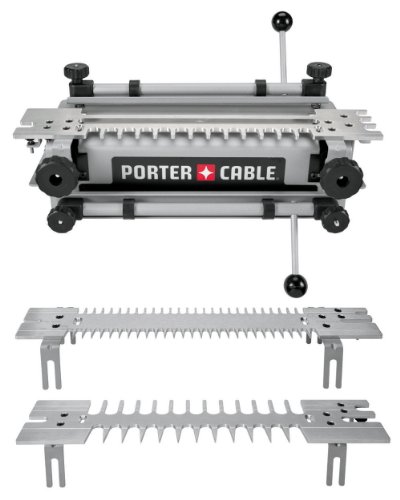

If you’re a woodworking enthusiast looking to create professional-grade drawers, boxes, and furniture joints, the PORTER-CABLE 4216 Dovetail Jig Kit offers exceptional versatility. The kit includes three aluminum templates that let you cut half-blind, through dovetails, and box joints in stock from 1/4 to 1-1/8 inches thick.
You’ll get everything needed except the router: four router bits, four template guides, and a durable steel base with heavy-duty cam clamps. The sandpaper-backed locking bars provide a firm grip, while the router bit depth gauge eliminates measuring. It’s backed by a three-year warranty and comes with on-board instructions for easy operation.
Best For: Woodworking enthusiasts and DIY furniture makers who want to create professional-quality dovetail joints and box joints for drawers, boxes, and furniture pieces.
Pros:
- Complete kit includes three versatile templates, four router bits, and all necessary guides for multiple joint types
- Heavy-duty steel base with cam-type clamps and sandpaper backing ensures secure workpiece holding
- Built-in router bit depth gauge and on-board instructions make setup and operation straightforward
Cons:
- Router must be purchased separately
- Learning curve required to master different joint types and template combinations
- Limited to stock thickness between 1/4 to 1-1/8 inches
Router Table Box Joint Jig with Three Finger Widths

The Router Table Box Joint Jig stands out as a versatile choice for woodworkers who need multiple joint sizes in their box-making projects. You’ll get three brass indexing keys (¼”, ⅜”, ½”) that guarantee uniform finger spacing for precise joints.
The jig’s MDF platform features a low-friction melamine coating that helps control tear-out while enhancing sliding performance. Its glass-filled nylon sled with long skis maintains squareness to your router bit, and built-in tabs stop cuts at the right spots. You can secure the platform firmly using the included soft-grip knobs that lock into a ¾” miter slot.
Best For: Woodworkers and DIY enthusiasts who regularly make boxes of varying sizes and need a reliable jig system for creating precise finger joints in multiple widths.
Pros:
- Includes three different sized indexing keys for versatile joint sizing options
- Melamine-coated MDF platform reduces friction and controls tear-out
- Glass-filled nylon sled with long skis ensures consistent square cuts
Cons:
- Requires careful initial setup and adjustment for accurate results
- Limited to three specific finger widths without additional accessories
- May need periodic maintenance to prevent material buildup affecting precision
Factors to Consider When Choosing a Box Joint Jig for Router
When you’re shopping for a box joint jig, you’ll need to evaluate several key features that affect its performance and usability. Your first considerations should be the jig’s material quality and construction, along with its compatibility with different joint sizes for your woodworking projects. Beyond these basics, focus on the setup process, clamping system effectiveness, and available template options to guarantee precise, repeatable cuts.
Material and Build Quality
Selecting a box joint jig with superior materials and construction guarantees long-lasting performance and precise joinery. You’ll want to look for jigs made from MDF with melamine coating, as this combination provides excellent durability while guaranteeing smooth sliding action and minimal tear-out during your cuts.
Pay attention to the jig’s overall construction stability, as it must maintain perfect squareness to your router bit for consistent results. Quality jigs feature stable indexing keys that deliver precise finger spacing, while low-friction surfaces make operation smoother and reduce component wear. Consider the jig’s weight too – a heavier model will help minimize vibrations during routing. These material and construction features work together to guarantee your box joints are accurate and strong every time.
Joint Size Compatibility
Beyond quality construction, joint size compatibility stands as a primary consideration for box joint jig selection. You’ll need to match your jig’s finger width options to your project requirements, with common sizes including ¼”, ⅜”, and ½” widths. Consider whether your chosen jig offers interchangeable indexing keys, as these provide valuable flexibility for different joint spacings.
Your stock material’s thickness is equally important, so verify that your jig can handle the dimensions you typically work with. Some models offer adjustable settings for various thicknesses, while others have fixed limitations. When evaluating compatibility, don’t forget to check that the jig maintains proper alignment with your router bit, as this guarantees consistently square and precise joints across all your projects.
Ease of Setup
Since time in the workshop is valuable, the ease of setup should be a key factor in choosing your box joint jig. Look for models that offer clear assembly instructions and a straightforward design that won’t leave you puzzled during setup.
You’ll want a jig with adjustable features, particularly interchangeable indexing keys, so you can quickly switch between different joint widths. A platform with a low-friction coating will make your router sled glide smoothly, while integrated miter slot knobs guarantee stable alignment without constant adjustments. Consider jigs that include practical setup aids like blocks for specific joint sizes – these can dramatically cut down your preparation time. The right combination of these features will help you spend less time setting up and more time creating precise, professional-looking joints.
Clamping System Design
The heart of a reliable box joint jig lies in its clamping system design. You’ll want a setup that maintains precise alignment throughout your cutting process, as any movement can compromise the accuracy of your box joints. Heavy-duty cam-type clamps offer superior grip on your workpiece, preventing unwanted shifts during operation.
Look for jigs that feature locking knobs that fit securely into miter slots, as these will provide enhanced stability and make repeated cuts more consistent. The clamping mechanism should also allow you to make quick adjustments for different material thicknesses, improving your workflow efficiency. Pay attention to the materials used in the clamps – options like glass-filled nylon or durable metals will guarantee your jig maintains its reliability even with frequent use.
Template and Guide Options
Selecting the right template and guide options builds upon a solid clamping foundation for your box joint jig. You’ll want to look for a jig that offers multiple template widths, typically including ¼”, ⅜”, and ½” sizes, to handle various project requirements.
Pay attention to the jig’s indexing key system, as interchangeable keys will give you more flexibility in spacing your finger joints. The template material matters too – a high-quality MDF base with low-friction coating will help you achieve smoother cuts and minimize tear-out. Make sure your chosen jig features a well-designed sled that maintains consistent alignment with your router bit. Don’t forget to check for miter track compatibility and adjustable guides, as these features will help you maintain precise control throughout your cutting process.
Price Vs Features
Finding the right balance between price and features presents a critical decision point when investing in a box joint jig. While higher-priced models often include valuable additions like interchangeable indexing keys and low-friction coatings, you’ll need to evaluate if these features align with your specific needs.
Consider jigs that offer multiple finger joint widths, as they’ll give you more versatility without requiring extra accessories. You’ll also want to examine the construction materials carefully – investing in a well-built jig made from premium materials can save you money in the long run by avoiding replacements. Before making your final decision, check user satisfaction ratings to confirm whether the extra features justify the cost. Higher-rated products typically deliver better joint quality and improved usability, making them worth the additional investment.
Storage and Portability
Beyond price considerations, storage and portability greatly impact your box joint jig experience. You’ll want a compact and lightweight design that’s easy to store and transport without sacrificing functionality. Look for jigs that fit standard miter slots, as they’ll adapt seamlessly to different router setups.
Choose models with built-in storage solutions for components like indexing keys and knobs. This keeps everything organized and readily available when you need it. Materials matter too – MDF with low-friction coatings offers a good balance between durability and manageable weight. Consider jigs that can be disassembled or feature folding capabilities, as they’ll take up less space in your workshop. These space-saving designs make it convenient to store your jig when it’s not in use.