You might not realize your circular saw is only as good as the surface it rides on. A flimsy plank invites kickback and crooked cuts, turning a simple job into a frustrating fight. That’s why the right table transforms your setup. Ready to see five workbenches that lock in accuracy and keep you safe?
| POWERTEC Portable Small Workbench with Vise (MT4006V) |  | Best Lightweight | Weight Capacity: 220 lbs | Weight: 11 lbs | Work Surface Material: Bamboo | VIEW LATEST PRICE | Read Our Analysis |
| Performance Tool W54025 Portable Folding Workbench and Vise |  | Best Compact | Weight Capacity: 200 lbs | Weight: 8.9 lbs | Work Surface Material: Alloy steel | VIEW LATEST PRICE | Read Our Analysis |
| Pony Portable Folding Work Table Workbench & Sawhorse |  | Best Heavy-Duty | Weight Capacity: 500 lbs (workbench), 1000 lbs (sawhorse) | Weight: 32 lbs | Work Surface Material: Aluminum frame, painted | VIEW LATEST PRICE | Read Our Analysis |
| Portable Folding Work Bench Table 2-in-1 with 2 Clamps & 6 Bench Dogs |  | Best Storage | Weight Capacity: 500 lbs | Weight: 34 lbs | Work Surface Material: ABS plastic | VIEW LATEST PRICE | Read Our Analysis |
| WORX Portable Folding Workbench 2-in-1 Pegasus Table & Sawhorse WX051 | 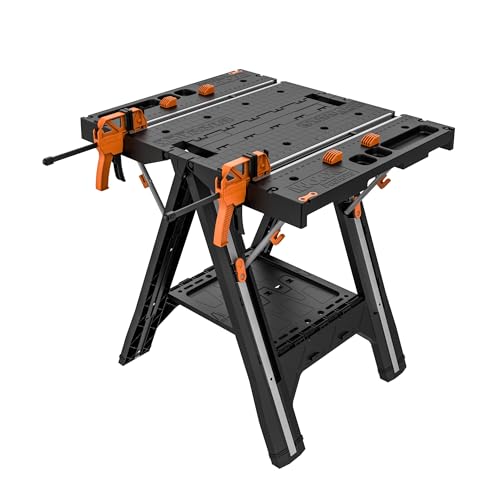 | Best Versatility | Weight Capacity: 300 lbs (workbench), 1000 lbs (sawhorse) | Weight: 30 lbs | Work Surface Material: Molded ABS plastic | VIEW LATEST PRICE | Read Our Analysis |
More Details on Our Top Picks
POWERTEC Portable Small Workbench with Vise (MT4006V)
If you’re hunting for a circular saw table that’s light enough to toss in the trunk, the POWERTEC MT4006V tops the lightweight list. At just 11 pounds, you’ll haul it anywhere without breaking a sweat, but don’t let that fool you. Its heavy-duty steel frame and bamboo top support up to 220 pounds. That’s solid stability for cutting, clamping, or painting. You get an adjustable vise, four bench dogs for holding work, and a built-in ruler with protractor scale for precise angles. Folds flat for storage, and it’s got a tool rack to keep gear handy. Perfect for on-the-go projects.
- Weight Capacity:220 lbs
- Weight:11 lbs
- Work Surface Material:Bamboo
- Work Surface Dimensions (Width x Depth):23.8″ x 13″
- Included Clamps:Adjustable vise (integrated)
- Bench Dogs Included:4 bench dogs
- Additional Feature:Built-in tool storage compartment
- Additional Feature:Bamboo tabletop construction
- Additional Feature:Non-marring plastic feet
Performance Tool W54025 Portable Folding Workbench and Vise
You’re a DIYer or tradesperson with limited workspace who needs a highly portable, compact workbench that doubles as a vise. The Performance Tool W54025 is your answer. It folds down for easy storage and transport, weighing just 8.9 pounds. The durable alloy steel surface supports up to 200 pounds. You’ll appreciate the printed grid, ruler, and protractor markings for precise measurements. The one-handed clamp system lets you adjust jaws independently, even angling them for irregular shapes. An open space underneath lets you cut or drill without damaging the surface. Four bench dogs stabilize your workpieces. It includes a tool storage rail. This bench fits where bigger ones can’t.
- Weight Capacity:200 lbs
- Weight:8.9 lbs
- Work Surface Material:Alloy steel
- Work Surface Dimensions (Width x Depth):25″ x 23-7/8″
- Included Clamps:One-handed clamp system (adjustable jaws)
- Bench Dogs Included:4 bench dogs
- Additional Feature:One-handed clamp system
- Additional Feature:Alloy steel work surface
- Additional Feature:Jaws resist warping
Pony Portable Folding Work Table Workbench & Sawhorse
This one’s a beast. You’ll flip between sawhorse and workbench in seconds, thanks to its 2-in-1 design. The aluminum frame keeps it light at 32 pounds, yet it laughs at heavy loads: 1,000 pounds as a sawhorse, 500 as a table.
Adjust the height across six levels, from 30 to 35 inches, so your back stays happy. It folds flat for your trunk, and the included kit covers everything: two bar clamps, two light clamps, bench dogs, and safety straps. No assembly, just unfold and get cutting. It’s earned a 4.8-star rating from 1,851 users for good reason.
- Weight Capacity:500 lbs (workbench), 1000 lbs (sawhorse)
- Weight:32 lbs
- Work Surface Material:Aluminum frame, painted
- Work Surface Dimensions (Width x Depth):25″ x 31″
- Included Clamps:2 medium-duty bar clamps + 2 light-duty clamps
- Bench Dogs Included:2 large + 2 small bench dogs
- Additional Feature:Height adjustable (30-35 inches)
- Additional Feature:1000 lb sawhorse capacity
- Additional Feature:Includes safety straps
Portable Folding Work Bench Table 2-in-1 with 2 Clamps & 6 Bench Dogs
A 2-in-1 workbench that mounts your circular saw directly is the ultimate space solution for small workshops. You’ll get pre-drilled holes for attaching your saw, drill, or router, transforming this bench into a compact machining station in seconds. It folds to just 5.9 inches thick, then unfolds into a 5.9-foot wide work surface with zero assembly. The reinforced steel frame handles up to 500 pounds, while anti-slip TPR feet keep it steady on any surface. Plus, you’ve got two clamps and six bench dogs for securing lumber, plus a built-in storage shelf for screws and bits. Cleanup takes 80% less time too!
- Weight Capacity:500 lbs
- Weight:34 lbs
- Work Surface Material:ABS plastic
- Work Surface Dimensions (Width x Depth):35″ x 25″
- Included Clamps:Dual horizontal and vertical clamps
- Bench Dogs Included:6 bench dogs
- Additional Feature:Pre-drilled tool attachment holes
- Additional Feature:Anti-slip TPR feet
- Additional Feature:Built-in adjustable storage shelf
WORX Portable Folding Workbench 2-in-1 Pegasus Table & Sawhorse WX051
Versatile enough for both DIYers and pros, the WORX WX051 transforms your workspace without taking over your garage. This 30-pound champ does double duty, switching from a sturdy 31×25-inch workbench to a 1000-pound capacity sawhorse. You’ll love the built-in measuring guide, so no hunting for a tape measure.
Here’s what you get:
- Two 24-inch quick clamps with 301 lbs. of force.
- Four clamp dogs for holding round or odd-shaped workpieces.
- Table links for connecting more WORX tables, expanding your setup.
Just fold it flat when you’re done. The 3-year warranty backs you up. It’s your portable workshop, always ready.
- Weight Capacity:300 lbs (workbench), 1000 lbs (sawhorse)
- Weight:30 lbs
- Work Surface Material:Molded ABS plastic
- Work Surface Dimensions (Width x Depth):31″ x 25″
- Included Clamps:2 quick clamps (24″)
- Bench Dogs Included:4 clamp dogs
- Additional Feature:Connects to compatible tables
- Additional Feature:Built-in measuring guide
- Additional Feature:Quick clamps with 301 lb force
Factors to Consider When Choosing a Circular Saw Table
Before you buy a circular saw table, you’ll need to weigh five key factors that can make or break your project. Think about portability and weight for moving it around your shop, plus the load capacity limits to handle your heaviest materials. And don’t overlook the work surface size, built-in measuring tools, and clamping system type, as each one directly impacts your precision and safety.
Portability and Weight
How do you balance getting a circular saw table to your work spot with keeping it steady once it’s there? That’s the real puzzle. Lighter tables win on portability, so you’ll sling them into a truck bed without swearing. But they can shimmy under load. Heavier models plant themselves firmly, yet you’ll dread hauling them up stairs. The sweet spot? Look for foldable or collapsible designs; they cut effective weight by shrinking awkward bulk. Check the listed weight, then ask yourself if you’ll lift it solo. A 40-pound table with decent locks beats a 70-pound beast you leave in the garage. Prioritize portability if you bounce between sites, but don’t sacrifice all stability for a few pounds. Your back and your cuts will thank you.
Load Capacity Limits
Once you’ve sorted out portability, the next thing to pin down is how much weight your table can actually shoulder. Don’t guess here; exceeding that limit turns your setup shaky and dangerous. For heavy duty tasks with thick lumber or large sheets, aim for a table boasting at least 500 pounds capacity. That’s your safety net for stability.
Smaller, portable saw tables usually max out around 200 to 250 pounds. Fine for light to medium projects, like plywood sheets or trim work. But if you’re pushing that boundary, step up.
Always check the manufacturer’s specified weight limit before you load up. Overloading invites instability, accelerates wear, and risks accidents. So, match your table’s limit to your heaviest material plus a little buffer. It’s a simple rule that keeps your cuts clean and your workshop safe.
Work Surface Size
Two key dimensions define your circular saw table’s work surface: width and depth, and getting them right transforms your workflow. A larger surface gives you comfortable room for handling 4×8 plywood or long boards without wrestling them, making complex cuts feel effortless. But don’t ignore your shop’s reality. Smaller surfaces excel for detailed cabinetry or trim work, though you’ll struggle with big materials. You want a board that matches your typical project size; that balance boosts efficiency and safety. So measure your common workpieces and your garage floor space before you commit. Aim for a surface that lets you support full sheets without sagging, yet still fits through your doorway. It’s about matching your table to your projects, not the other way around.
Built-In Measuring Tools
Built in measuring tools can really make or break your workflow. You want a table with clearly calibrated rulers, protractors, and grid marks etched right into the surface. That way, you ditch the extra tape measure and square, saving time on every cut. For complex or repetitive projects, accurate measurement indicators are non negotiable; they guarantee consistent results without you having to stop and measure again.
Here’s what to look for:
- Durable, imprinted scales that won’t wear off over time.
- Visible, easy to read markings in both inches and metric.
- Precise alignment guides for quick material setup.
These features cut down on measurement errors, boosting both safety and efficiency. You’ll zip through jobs with confidence, knowing your cuts are spot on without extra hassle.
Clamping System Type
Since the clamping system you choose directly controls how your material behaves under the blade, you want a setup that locks things down fast and stays put. A one handed clamp cuts your setup time in half, so you’re not fighting with knobs every time you reposition. Angled or multi jaw clamps grip irregular shapes without slipping, which is a lifesaver when you’re working with curved or uneven stock. The clamp’s strength matters most: a flimsy mechanism lets your workpiece shift mid cut, ruining precision and safety. Look for systems compatible with bench dogs or adjustable jaws, since those extras let you handle odd sized pieces without custom jigs. Remember, a clamp that’s quick to adjust but weak in hold is a deal breaker. Prioritize rugged, versatile clamps that give you confidence with every pass.
Frame Material Durability
Because your saw table’s frame is literally the foundation of every cut, the material it’s made from determines how long it’ll hold up under real shop abuse. You’ll find steel frames offer the best impact resistance, so they won’t warp or deform during heavy cutting. They’re your go-to for stability and longevity. But if you need portability, aluminum is your friend. It’s lightweight and corrosion-resistant, making it perfect for outdoor jobs or moving around your shop. Plastic frames? They’re cheaper, sure, but they won’t take repeated abuse without cracking. And that compromises your precision and safety. So, think about your work environment. A durable frame isn’t just a luxury; it’s a necessity for clean, accurate cuts every time.