Crown molding can transform your room from a plain box into an architectural masterpiece, but getting those angles right can feel like solving a complex puzzle. If you’re ready to tackle crown molding installation, you’ll need more than just your miter saw – you’ll need the right jig to guarantee precise cuts every time. Let’s explore the top three crown molding jigs that professional carpenters trust to deliver flawless results.
Kreg KMA2800 Crown-Pro Crown Molding Tool


The Kreg KMA2800 Crown-Pro Crown Molding Tool is a DIY enthusiast’s best friend, transforming complex compound-angle cuts into straightforward operations. This lightweight polymer tool works with both 10- and 12-inch miter saws, handling molding up to 5½ inches wide.
You’ll appreciate its adjustable spring base that locks from 30° to 60°, and the included angle finder helps you nail both inside and outside corners perfectly. While some users note the material feels a bit flimsy, the results speak for themselves – homeowners report completing projects in about 5 hours that would’ve cost $2,000+ professionally. The clear instructions make setup simple, though you’ll want to double-check your settings for accuracy.
Best For: DIY homeowners and hobbyists looking to install crown molding while avoiding expensive professional installation costs and wanting to achieve professional-looking results without mastering complex compound cuts.
Pros:
- Eliminates the need for complicated compound-angle calculations and cuts
- Compatible with both 10-inch and 12-inch miter saws
- Significant cost savings compared to professional installation
Cons:
- Polymer construction may feel flimsy to some users
- Requires careful double-checking of settings for accuracy
- Some users report difficulty adjusting the spring angle
Cut N Crown Molding Cutting Jig for Miter Saw
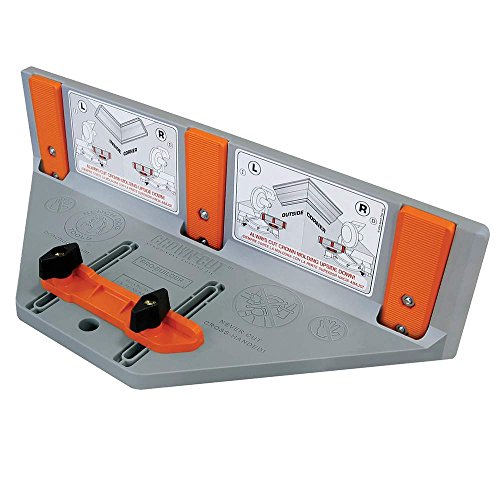
Professional contractors and DIY enthusiasts seeking precision in crown molding will find the Cut N Crown Molding Cutting Jig to be a versatile solution. This lightweight, 1.25-pound tool fits all miter saws 10 inches and larger, accommodating both regular and sliding models.
You’ll appreciate the jig’s fence risers, which hold molding up to 6 inches wide at precise angles. While some users report initial setup challenges, the included guide helps minimize miscuts. The durable plastic construction features reinforced crisscross strips for strength, and you can easily transport it between job sites. Just remember to mark test cuts and use painter’s tape for wall orientation.
Best For: Professional contractors and DIY enthusiasts who need precise crown molding cuts and want a portable, universal jig that works with most miter saws.
Pros:
- Universal compatibility with 10-inch and larger miter saws
- Lightweight and portable design for easy transport between job sites
- Fence risers accommodate molding up to 6 inches wide at precise angles
Cons:
- Initial setup and orientation can be confusing for new users
- Some reports of incorrect or missing parts
- May require additional support for longer boards to maintain accuracy
Milescraft 1405 Crown45 – Crown Molding Tool, Yellow

Experienced DIYers and contractors seeking hassle-free crown molding installations will appreciate Milescraft’s 1405 Crown45 tool. This lightweight aluminum jig supports crown molding from 2″ to 5-1/2″ and features adjustable settings for 38°, 45°, and 52° spring angles.
You’ll find cutting crown molding simpler with its right-side-up orientation and front-entry blade design that eliminates the need for compound cuts. The compact tool includes spring angle setting triangles and accommodates dentil-style moldings with its indented surface. While it’s earned a solid 4.3-star rating, be aware that you might encounter challenges when working with longer pieces or experience some flexibility in the angle lock.
Best For: DIY enthusiasts and professional contractors who want to simplify their crown molding installations without dealing with complex compound cuts.
Pros:
- Supports multiple crown molding sizes (2″ to 5-1/2″) and spring angles (38°, 45°, 52°)
- Right-side-up cutting orientation makes visualization easier
- Compact, lightweight design with included angle setting triangles
Cons:
- May have difficulty handling longer pieces of molding
- Some users report issues with angle lock stability
- Design flexibility could affect overall cutting precision
Factors to Consider When Choosing a Crown Molding Jig for Miter Saw
When you’re shopping for a crown molding jig, you’ll need to evaluate several key features to guarantee you’re making the right choice for your projects. You should check the jig’s material durability and construction quality, verify the cutting width capacity matches your molding dimensions, and confirm the spring angle adjustability aligns with your specific crown molding profiles. The jig’s compatibility with your miter saw model and its overall setup complexity will also impact your work efficiency and results.
Material and Build Quality
The durability and reliability of your crown molding jig largely depend on its material composition and construction quality. You’ll find that jigs made from polymer, aluminum, or high-grade plastic offer superior strength and longevity, making them worth the investment for professional-grade results.
When evaluating build quality, pay attention to the jig’s weight. Heavier models provide better stability during cutting, which helps prevent unwanted movement and guarantees more accurate angles. Look for designs that incorporate adjustable spring bases or braces, as these features let you securely position your molding at various angles for precise compound cuts. The jig’s material should also allow for easy adjustments while maintaining rigidity under pressure – a vital factor in achieving consistent, professional results across different molding sizes.
Cutting Width Capacity
Most crown molding projects demand careful attention to cutting width capacity when selecting a jig. You’ll want to verify your jig can handle moldings up to 5-1/2 inches wide, which is standard for many residential applications. Some premium models even offer expanded capacity up to 6 inches for larger crown profiles.
When evaluating width capacity, check that the jig you’re considering can accommodate the specific molding sizes you’ll be working with. Look for adjustable features that let you secure different molding profiles without compromising stability. The jig should provide consistent support across the entire width of your workpiece, whether you’re cutting narrow 2-inch trim or wider decorative crown molding. This versatility verifies you won’t need to purchase additional jigs as your project requirements change.
Spring Angle Adjustability
Through proper spring angle adjustability, crown molding jigs transform complex cutting tasks into manageable operations. When choosing a jig, you’ll want to look for one that offers a range of angles between 30° and 60° to accommodate various molding profiles you might encounter.
The best jigs come with preset angles (typically 38°, 45°, and 52°) that match standard crown molding dimensions, making your work more efficient. You’ll find that models with integrated alignment guides help guarantee your angle adjustments stay precise throughout your cutting process. Don’t overlook the smoothness of the adjustment mechanism – you’ll want a jig that lets you change angles quickly and securely without struggling. This feature becomes especially important when you’re working on projects that require multiple angle changes.
Miter Saw Compatibility
When selecting a crown molding jig, you’ll need to carefully evaluate its compatibility with your miter saw to guarantee successful cuts. Your saw should have at least a 10-inch blade capacity to work effectively with most jigs on the market.
Before purchasing, check that the jig’s dimensions match your specific molding requirements. Many jigs can handle crown molding up to 6 inches wide, but you’ll want to verify this matches your project needs. Pay attention to the angle adjustment range, which typically spans from 30° to 60°, ensuring it accommodates your desired crown molding angles.
Review the manufacturer’s compatibility list and user feedback for your specific miter saw model. Most jigs are designed to work with both standard and sliding miter saws, but it’s important to confirm proper fit before investing.
Tool Setup Complexity
Tool setup complexity stands as an essential factor in selecting the right crown molding jig for your miter saw. You’ll find that simpler jigs often come with straightforward instructions that get you cutting faster, while more sophisticated models might require additional time to master their setup procedures.
When evaluating setup complexity, you’ll want to take into account the jig’s adjustable features, such as angle settings and spring bases. While these elements can improve your cutting precision, they may initially slow you down if you’re not familiar with their operation. Look for jigs that include built-in guides and clear markers, as these help with proper orientation and alignment. Also, check whether the jig comes with detailed manuals or visual aids—these resources can greatly reduce your learning curve and help guarantee you’re using the tool correctly.