You’ve probably stood in the blade aisle — or scrolled through listings — completely overwhelmed by specs that mean nothing without context. Kerf width, hook angles, tooth count: it all blurs together fast. Here’s the thing — the wrong blade doesn’t just waste money, it ruins your work. You deserve a straight answer on exactly which flat-tooth blade fits your situation, and that’s precisely what’s coming next.
| CMT ITK Xtreme Industrial Rip Saw Blade 10-Inch |  | Best Thin-Kerf Rip | Tooth Count: 24 teeth | Kerf Width: 0.098 in (thin kerf) | Blade Diameter: 10 in | VIEW LATEST PRICE | Read Our Analysis |
| Freud LM75R010: 10″ Industrial Thin Kerf Glue Line Ripping Blade Carbide | 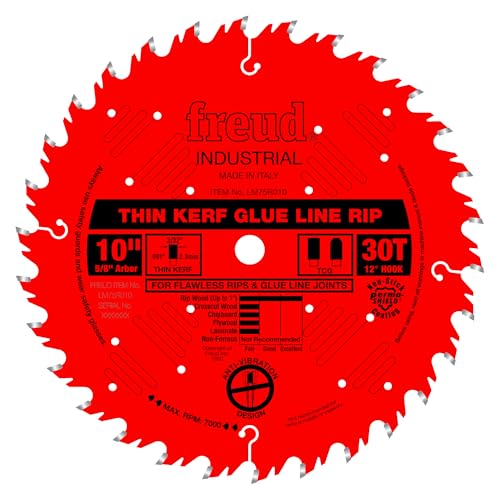 | Best Glue-Line Finish | Tooth Count: 30 teeth | Kerf Width: 0.091 in (thin kerf) | Blade Diameter: 10 in | VIEW LATEST PRICE | Read Our Analysis |
| 10-Inch Carbide Tipped Grooving Table Saw Blade |  | Best For Joinery | Tooth Count: 40 teeth | Kerf Width: 0.125 in (1/8 in) | Blade Diameter: 10 in | VIEW LATEST PRICE | Read Our Analysis |
| Ridge Carbide 10″ Groover Saw Blade 40-Tooth |  | Best Overall | Tooth Count: 40 teeth | Kerf Width: 0.250 in (1/4 in) | Blade Diameter: 10 in | VIEW LATEST PRICE | Read Our Analysis |
| FOXBC 10-Inch Thin Kerf Table Saw Blade |  | Budget-Friendly Pick | Tooth Count: 24 teeth | Kerf Width: 0.094 in (thin kerf) | Blade Diameter: 10 in | VIEW LATEST PRICE | Read Our Analysis |
| CMT 201.024.10 10-Inch Diameter 24 Teeth Industrial Ripping Saw Blade |  | Best Heavy-Duty Rip | Tooth Count: 24 teeth | Kerf Width: 0.126 in | Blade Diameter: 10 in | VIEW LATEST PRICE | Read Our Analysis |
| Infinity Cutting Tools 8″ Flat-Top Dado Saw Blade – 1/4″ Kerf |  | Best Dado Blade | Tooth Count: 24 teeth | Kerf Width: 0.250 in (1/4 in) | Blade Diameter: 8 in | VIEW LATEST PRICE | Read Our Analysis |
More Details on Our Top Picks
CMT ITK Xtreme Industrial Rip Saw Blade 10-Inch
If you’re after a thin-kerf rip blade that handles hardwood like it’s on a mission, the CMT ITK Xtreme is worth your attention. Here’s the thing — that 0.098-inch kerf isn’t just marketing. It genuinely reduces strain on your saw and keeps heat from building up mid-cut. You’re getting 24 micrograin carbide teeth with a 20° hook angle, which means aggressive, clean ripping. The tri-metal brazing keeps teeth locked tight longer than cheaper alternatives. Now, this isn’t your crosscut blade — it’s built for ripping. If that’s your frustration, you’ve found your fix.
- Tooth Count:24 teeth
- Kerf Width:0.098 in (thin kerf)
- Blade Diameter:10 in
- Arbor Size:5/8 in
- Tooth Grind:ATB (Alternate Top Bevel), 1 flat + 2/15° alternate bevels
- Primary Application:Ripping softwood, hardwood, plywood, wood composites
- Additional Feature:Tri-metal copper-silver brazing
- Additional Feature:Thin-kerf reduces saw strain
- Additional Feature:Anti-kickback safety design
Freud LM75R010: 10″ Industrial Thin Kerf Glue Line Ripping Blade Carbide
When you need a glue-line finish without the sanding marathon afterward, the Freud LM75R010 earns its reputation. Here’s the thing — 30 teeth, a 12° hook angle, and TiCo Hi-Density Carbide aren’t marketing fluff. That triple-chip tooth geometry actually delivers splinter-free rips you can take straight to glue-up. The Perma-Shield coating cuts friction without needing external stabilizers, which you’ll appreciate mid-project. Now, the .091″ kerf keeps waste minimal on expensive stock. This one’s for you if precision ripping matters more than budget. Obviously it’s not cheap, but one blade replacing sandpaper sessions? That math works fast.
- Tooth Count:30 teeth
- Kerf Width:0.091 in (thin kerf)
- Blade Diameter:10 in
- Arbor Size:5/8 in
- Tooth Grind:Triple-chip grind
- Primary Application:Glue-line ripping, finish-quality applications
- Additional Feature:Perma-Shield non-stick coating
- Additional Feature:TiCo Hi-Density carbide
- Additional Feature:Glue-line finish quality
10-Inch Carbide Tipped Grooving Table Saw Blade
Joinery work demands a blade that won’t leave you chasing ragged, uneven grooves. Here’s the thing — most blades make you compromise. Not this one. The Ultra-Shear US1040-18FTGR runs 40 carbide-tipped flat-top teeth through American steel that’s heat-treated, tensioned, and smithed right in Strongsville, Ohio. You get a 1/8-inch kerf, flat-bottom cuts, and square grooves that rival a full dado stack. Half-laps, box joints, rabbets, tenons — it handles all of them cleanly. If you’re doing serious joinery and want one blade doing heavy lifting, this is obviously your move.
- Tooth Count:40 teeth
- Kerf Width:0.125 in (1/8 in)
- Blade Diameter:10 in
- Arbor Size:5/8 in
- Tooth Grind:Flat Top Grind (FTG)
- Primary Application:Dados, half-laps, box joints, finger joints, rabbets, tenons
- Additional Feature:Made in Ohio, USA
- Additional Feature:Heat-treated, tensioned plate
- Additional Feature:Dado-stack comparable cuts
Ridge Carbide 10″ Groover Saw Blade 40-Tooth
Precision-cut joinery deserves a blade that’s earned its reputation across the board. You’ve probably wrestled with grooves that blow out edges or leave fuzz you’re sanding forever — that’s the blade, not your technique. Ridge Carbide’s 40-tooth FTG groover cuts a dead-straight 0.250″ kerf with a 1200-grit micro finish, meaning you’re getting glass-smooth walls right off the saw. The C-4 micro-grain carbide teeth run one-third larger than premium competitors, and you’ll get 20–25 sharpenings before replacement. Made in the USA, awarded repeatedly. If clean 1/4″ grooves matter to you, this blade makes the decision obvious.
- Tooth Count:40 teeth
- Kerf Width:0.250 in (1/4 in)
- Blade Diameter:10 in
- Arbor Size:5/8 in
- Tooth Grind:Flat Top Grind (FTG)
- Primary Application:Grooving, box joints, 1/4 in flat-bottom grooves
- Additional Feature:20–25 resharpenings possible
- Additional Feature:1/3 larger carbide teeth
- Additional Feature:1200-grit micro finish
FOXBC 10-Inch Thin Kerf Table Saw Blade
Tight on budget but still want a reliable flat-tooth blade? Here’s the thing — the FOXBC 10-Inch delivers more than its price suggests. You’re getting a 24-tooth FTG grind with a 20° hook angle, which means fast, aggressive ripping through hardwood and softwood without bogging down your saw. The .094-inch thin kerf reduces waste and strain on underpowered motors, so if you’re running a contractor-style saw, you’ll actually feel the difference. It handles material from ¾-inch up to 2¾-inch thick. Obviously, it’s not a premium finish blade — but for ripping stock efficiently? You’d be foolish to overlook it.
- Tooth Count:24 teeth
- Kerf Width:0.094 in (thin kerf)
- Blade Diameter:10 in
- Arbor Size:5/8 in
- Tooth Grind:Flat Top Grind (FTG)
- Primary Application:Ripping hardwood/softwood, crosscutting, plywood
- Additional Feature:Cuts ¾” to 2¾” thick
- Additional Feature:Multi-brand saw compatibility
- Additional Feature:High-density tungsten carbide
CMT 201.024.10 10-Inch Diameter 24 Teeth Industrial Ripping Saw Blade
If you’re wrestling with heavy-duty rip cuts, the CMT 201.024.10 handles industrial-grade ripping like it was born for it. Here’s the thing — 24 flat-top teeth with an aggressive 20° hook angle means you’re tearing through hardwood and softwood without babying the feed rate. The PTFE coating keeps pitch from building up, which obviously matters after hours of continuous use. German steel body, tri-metal brazing, anti-kickback shoulders — CMT engineered out the headaches before you experienced them. This one’s for you if you’re running a table saw hard and need consistent, clean glue-line rips without drama. Easy choice.
- Tooth Count:24 teeth
- Kerf Width:0.126 in
- Blade Diameter:10 in
- Arbor Size:5/8 in (inferred from standard 10 in blade)
- Tooth Grind:MFLAT grind
- Primary Application:Fast, heavy-duty rip cuts on soft/hardwood, plywood
- Additional Feature:PTFE non-stick orange coating
- Additional Feature:Anti-kickback shoulder per tooth
- Additional Feature:Hook-shaped expansion slots
Infinity Cutting Tools 8″ Flat-Top Dado Saw Blade – 1/4″ Kerf
Woodworkers who cut dados regularly know this blade’s for you if precision flat-bottom grooves are non-negotiable. Infinity’s 8-inch single blade runs German cold-rolled steel with C4 micro-grain carbide teeth, and that’s not marketing fluff — C4 carbide stays sharper longer and resharpens more times than standard carbide. Here’s the thing: 24 flat-top ground teeth paired with axial face grinding means your dado floors come out genuinely clean. Laser-cut dampening slots with resin fill kill vibration without killing your focus. It’s SawStop compatible, handles hardwood, laminates, and veneered plywood confidently. If clean dados matter more than saving twenty bucks, grab it.
- Tooth Count:24 teeth
- Kerf Width:0.250 in (1/4 in)
- Blade Diameter:8 in
- Arbor Size:5/8 in (inferred from standard specs)
- Tooth Grind:Flat Top Grind (FTG)
- Primary Application:Flat-bottom dados, box joints, rabbets, tenons, ripping, crosscutting
- Additional Feature:SawStop compatible design
- Additional Feature:Resin-filled dampening slots
- Additional Feature:5-axis CNC ground teeth
Factors to Consider When Choosing a Flat Tooth Table Saw Blade
Picking the wrong flat tooth blade is one of those frustrating mistakes that costs you time, money, and a ruined workpiece before you even realize what went wrong. Here’s the thing — tooth count, kerf width, hook angle, blade material, and saw compatibility all work together, and getting even one of them wrong throws off your entire cut. Once you understand how these factors interact with your specific saw and project type, choosing the right blade stops feeling overwhelming and starts feeling obvious.
Tooth Count Matters
Tooth count is one of those specs that sounds boring until you ruin a nice piece of walnut with the wrong blade — then it gets your full attention real fast. Here’s the thing: if you’re cutting dadoes or joinery, you want 40-60 teeth. More teeth mean smoother grooves, less scalloping, cleaner results. Now, if you’re ripping thick hardwood all day, drop down to 24-30 teeth. You’ll cut faster, generate less heat, and actually spare your motor. Obviously, thinner, delicate stock demands higher tooth counts. All right, here’s your simple rule — match tooth count to your task, not your ego. Get that right, and you’ve basically already made the smartest blade decision before you’ve even looked at a brand.
Kerf Width Considerations
Kerf width sounds like one of those specs only engineers lose sleep over, but if you’ve ever bogged down a contractor saw mid-cut or watched a laminate edge splinter like it had a grudge, you already know it matters.
Here’s the thing — a thin kerf around 0.090 inches removes less material, cuts faster, and reduces motor strain by roughly 5-10% compared to a 0.125-inch blade. Your saw breathes easier. Now, thicker kerfs aren’t villains; they’re actually steadier through dense hardwoods, reducing vibration where it counts.
The real trap? Choosing a kerf too thin for your blade’s plate thickness causes wobble and kills accuracy. Match them correctly. If you’re cutting plywood or laminates, go thin — your edges will thank you.
Hook Angle Effects
Hook angle is one of those specs that sounds academic until your blade starts dragging through white oak like it owes you an apology. Here’s the thing — that number actually matters more than most buyers realize.
A 20° hook angle pulls material aggressively, increasing removal rate but inviting tear-out on finicky grain. You’ll feel the difference immediately. Smaller angles, around 12°, produce cleaner glue-line cuts but feed slower — honestly, the right trade-off for finish work.
Now, softwoods respond well to 15°–18°, while hardwoods benefit from 18°–20° to prevent binding. Go too aggressive, though, and you’re adding vibration, heat, and kickback risk.
Match your hook angle to your material, and choosing your blade suddenly becomes obvious.
Blade Material Quality
When a blade dulls after a dozen ripping sessions, the culprit is almost always the material — not how you used it. Here’s the thing: tungsten carbide teeth rated at 1,800–2,200 HV stay sharper far longer than standard steel, and micrograin formulations like C4 or TiCo genuinely matter when you’re cutting abrasive composites repeatedly. Obviously, harder teeth mean less frequent sharpening. Now, the body matters too — steel plates hardened to 46–48 HRC reduce deflection during heavy ripping. Non-stick coatings like PTFE prevent pitch buildup, keeping cuts cleaner longer. Tri-metal brazing holds teeth through serious thermal stress, so you’re not replacing a blade because a tooth popped loose. Better materials cost more upfront. They cost less over time. That math’s pretty easy.
Compatible Saw Types
Getting the right blade material is only half the battle — if that blade doesn’t actually fit your saw, you’ve just bought an expensive paperweight. Here’s the thing: most flat tooth blades use a 5/8-inch arbor, which matches standard table saws, radial-arm saws, and miter saws perfectly. Obviously, you’ll also want to confirm the diameter — typically 10 inches for standard table saws. Now, kerf width matters too, because a mismatched kerf causes binding against your fence or wastes material unnecessarily. Your motor needs enough torque to handle the blade’s plate thickness without stalling mid-cut. If your saw has anti-kickback features, choose a blade with a reduced-kickback design. Match these specs first, and choosing suddenly feels less overwhelming.