
Much like a skilled artisan wielding a sharp blade, you're about to uncover the essential tools that elevate your chisel sharpening game. Whether you're a seasoned woodworker or just starting, finding the right sharpener can make all the difference in your craft. With insights from experts, we'll explore three top choices that promise precision and ease. Ready to enhance your woodworking skills with the best tools at your disposal?
key Takeaways
- Honing Guide Woodworking Tool is durable, fits blades up to 2.55 inches, but may misalign with shorter shank chisels.
- ATLIN Honing Guide offers adjustable angles, fits chisels from 1/8" to 1-7/8", but not plane irons under 1-3/8".
- Chisel Sharpening Kit includes a two-grit diamond stone, suits various chisel sizes, but angle consistency can be challenging.
- Compatibility with a range of tool sizes and adjustable angles enhances sharpener versatility and effectiveness.
- Durable materials like high-density aluminum alloys and hardened steel ensure longevity and resistance to wear.
Honing Guide Woodworking Tool, Chisel Sharpening Jig


If you're a woodworking enthusiast looking for a reliable way to maintain your chisels and planer blades, the Honing Guide Woodworking Tool, Chisel Sharpening Jig is a standout choice. This tool offers an adjustable angle sharpener that fits blades up to 2.55 inches, ensuring a long-lasting, sharp edge. With its wider roller, you can easily sharpen tools using back-and-forth motion on both oil and water stones. Users appreciate its robust design, though some find it initially cumbersome. While it provides a cost-effective sharpening solution, be mindful of compatibility with shorter shank chisels and the need for a suitable stone setup.
Best For: Woodworking enthusiasts looking for a cost-effective and versatile sharpening tool for maintaining chisels and planer blades.
Pros:
- Adjustable angle sharpener accommodates blades up to 2.55 inches.
- Compatible with both oil and water stones for versatile sharpening methods.
- Robust design enhances durability and user satisfaction.
Cons:
- Compatibility issues with shorter shank chisels and standard stone sizes.
- Degree guide may not be accurate; clamping area can be misaligned.
- Some users received used items, impacting overall experience.
ATLIN Honing Guide for Chisels and Planer Blades
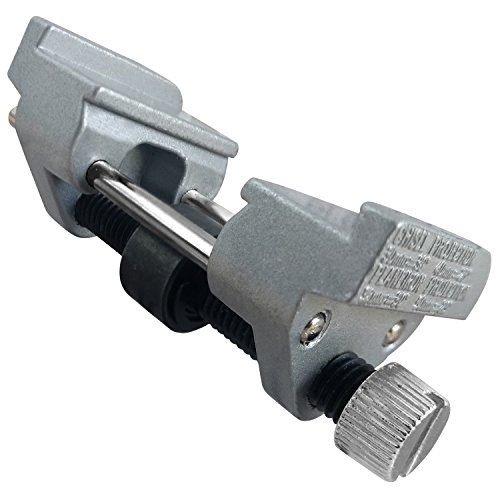
The ATLIN Honing Guide stands out as an excellent choice for woodworking enthusiasts who need precise sharpening for a range of chisels and planer blades. It fits chisels from 1/8" to 1-7/8" and planer blades from 1-3/8" to 3-1/8", offering versatility in your workshop. Its cast aluminum body and hardened steel roller wheel guarantee durability and resist wear. Adjustable sharpening angles cater to different needs, with easy-to-follow instructions for setup. Users praise its improved sharpening results and consistent burr formation. Just be mindful of clamping stability and adjustments. Overall, it's a reliable tool with a 4.3-star rating.
Best For: Woodworking enthusiasts seeking precise sharpening for various chisels and planer blades.
Pros:
- Fits a wide range of chisel and planer blade sizes.
- Durable cast aluminum body with hardened steel roller wheel.
- Adjustable sharpening angles with clear setup instructions.
Cons:
- Difficulty with blade clamping stability for some users.
- Challenges in adjusting the screw while holding the blade.
- Cannot accommodate plane irons less than 1-3/8".
Chisel Sharpening Kit with Diamond Stone and Honing Guide Tool
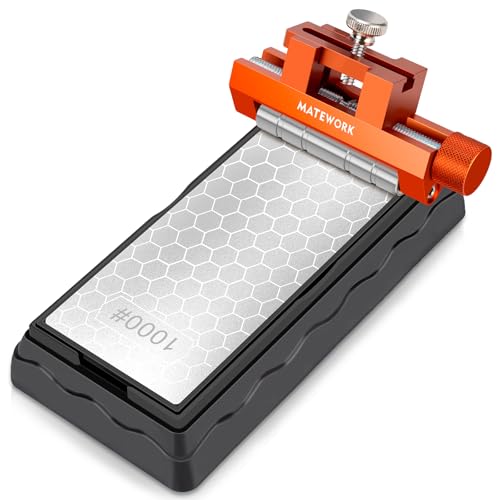
Looking for a reliable sharpening solution for your woodworking tools? The Chisel Sharpening Kit with Diamond Stone and Honing Guide Tool might just be what you need. This kit features a diamond sharpening stone with two grits (400 and 1000) and a honing guide tool made of durable aluminum alloy. It accommodates various chisel sizes with its adjustable height and width. Users appreciate its ease of setup, though maintaining angle consistency can be tricky. Start with the coarse side and finish with the fine grit for a sharp edge. Some users suggest lubrication for smoother roller glide and enhanced performance.
Best For: Woodworkers and DIY enthusiasts looking for a versatile and durable sharpening solution for maintaining their chisel edges.
Pros:
- Made from high-density aluminum alloy for durability and rust resistance.
- Adjustable design accommodates various chisel sizes.
- Two-sided diamond stone offers effective sharpening with grits of 400 and 1000.
Cons:
- Some users struggle with maintaining angle consistency during sharpening.
- Clamping mechanism may slip on tapered chisels, requiring adjustments.
- Reports of diamond stone chipping and wearing after limited use.
Factors to Consider When Choosing a Sharpener for Chisels
When picking a sharpener for your chisels, consider if it's compatible with the tool sizes you have and if it offers adjustable sharpening angles. You'll want something durable, made from quality materials, and easy to use. Look for versatility in sharpening methods to suit different needs and preferences.
Compatibility With Tool Sizes
Choosing the right sharpener for your chisels hinges on understanding compatibility with various tool sizes. You need to ascertain the sharpener fits different chisel widths, especially for tapered chisels. This prevents slippage and guarantees a smooth sharpening process. Some sharpeners cater specifically to chisels ranging from 1/8" to 1-7/8" and planer blades from 1-3/8" to 3-1/8". Look for adjustable sharpening jigs that accommodate a range of heights and widths, ideally from 0-11mm in height and 5-65mm in width. This flexibility allows you to fit various chisel sizes effectively. Additionally, sharpeners with clear clamping sections tailored for different chisels enhance stability and accuracy. These features are essential for maintaining consistent and precise sharpening results.
Adjustable Sharpening Angles
After ensuring your sharpener is compatible with various chisel sizes, it's important to contemplate adjustable sharpening angles for enhanced versatility. These angles let you customize sharpening for different tools and applications, boosting effectiveness. Many jigs and guides offer angle settings for common degrees like 25° and 30°, ideal for chisels and planer blades. Consistently using a fixed angle maintains an even edge, essential for peak cutting performance and prolonging tool life. Efficiently switching angles is easy with markings or a ruler accessory, allowing smooth changes between tasks. However, some systems might need extra tools or tweaks for desired angles, especially with shorter shank chisels or varying blade widths. This flexibility is key for diverse woodworking needs.
Durability and Material Quality
A solid sharpener's durability hinges on the quality of its materials. When choosing a sharpener, consider those made from high-density aluminum alloys and hardened steel components, as they resist wear and rust effectively. Steel roller wheels are essential, preventing flat spots and ensuring the tool performs well over time. Opt for sharpening stones with long-lasting surfaces; diamond or ceramic options outlast traditional whetstones. The sharpener's construction also plays an important role—look for robust clamping and locking mechanisms to handle regular use without losing functionality. To maximize lifespan, don't forget regular maintenance. Lubrication and proper storage are simple steps that keep your sharpening tools in top shape, ensuring they remain effective for extended periods.
Ease of Use
When selecting a chisel sharpener, it's not just about durability; you should also focus on ease of use. Look for tools with clear, illustrated instructions to help you set up quickly, whether you're a novice or an expert. Adjustable clamping mechanisms are essential as they securely hold different chisel sizes, ensuring consistent sharpening angles. A wider roller design can greatly enhance your experience by adding stability and allowing smooth back-and-forth motions. Additionally, tools that accommodate both oil and water stones provide the freedom to use your preferred method without hassle. Keep in mind the initial learning curve; simpler designs typically result in quicker mastery and greater satisfaction. Prioritizing these features will make your sharpening process more efficient and enjoyable.
Versatility in Sharpening Methods
While selecting a chisel sharpener, versatility in sharpening methods is a key consideration. A good sharpener should accommodate both oil and water stones, providing flexibility to suit your preferences and tool needs. Look for adjustable sharpening angles, which are essential for achieving different edge types and maintaining consistency across various chisel sizes and shapes. Multi-functional sharpeners are excellent, as they can handle not only chisels but also planer blades, carving knives, and flat irons, maximizing utility. A wider roller design offers smoother motion and enhances stability, making it easier to achieve a sharp edge without slipping. Verify the sharpener is compatible with different blade widths and lengths to use it with a wide range of chisels and planer blades, enhancing its versatility.
