You’re tired of fighting twisted, cupped boards that refuse to cooperate. The right jointer plane changes everything, turning rough lumber into dead-flat surfaces with clean, effortless passes. We’ve picked five models that deliver that glass-smooth precision. But not all of them suit your style. Let’s break down what separates a workhorse from a headache.
| Big Horn 19330 No. 7 Jointer Jack Plane |  | Best Value | Overall Length: 22 inches | Cutter Width: 2-23/64 inches (approx. 60mm) | Body Material: Cast iron | VIEW LATEST PRICE | Read Our Analysis |
| Taytools #7 Bedrock Style Jointer Plane |  | Professional Grade | Overall Length: 22-1/8 inches | Cutter Width: 2-3/8 inches | Body Material: Ductile cast iron | VIEW LATEST PRICE | Read Our Analysis |
| Groz No. 6 Fore Plane Hand Planer |  | Budget-Friendly Pick | Overall Length: 18 inches | Cutter Width: 60mm (approx. 2.36 inches) | Body Material: Grey cast iron | VIEW LATEST PRICE | Read Our Analysis |
| Hoteche 14-Inch Adjustable Wood Bench Plane |  | Entry-Level Choice | Overall Length: 14 inches | Cutter Width: 2 inches | Body Material: Cast iron | VIEW LATEST PRICE | Read Our Analysis |
| Faithfull No.7 Jointing Plane | 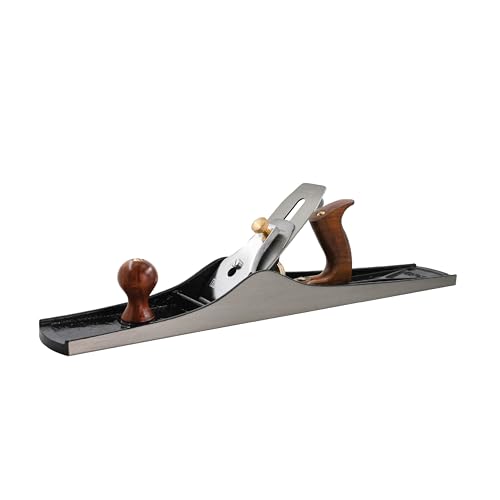 | Best Overall | Overall Length: 555mm (approx. 21.85 inches) | Cutter Width: 60mm (approx. 2.36 inches) | Body Material: Grey cast iron | VIEW LATEST PRICE | Read Our Analysis |
More Details on Our Top Picks
Big Horn 19330 No. 7 Jointer Jack Plane
Looking for a long bench plane that won’t bust your budget? The Big Horn 19330 No. 7 Jointer Jack Plane delivers a 22 inch precision ground sole that bridges high and low spots on long boards, prepping edges for glue ups or smoothing. Its solid cast iron body and 2 23/64 inch EN42Cr blade cuts clean at a 45° angle. You get an adjustable frog to tweak the mouth opening, plus a brass depth knob and lateral adjuster for fine tuning. The Sapele handles stay comfortable during heavy use. Weighing 8 pounds, it’s manageable for long sessions. Amazon’s return policy backs it.
- Overall Length:22 inches
- Cutter Width:2-23/64 inches (approx. 60mm)
- Body Material:Cast iron
- Handle Material:Sapele wood (front knob), rosewood (rear handle)
- Blade Material:EN42Cr hardened steel
- Adjustable Frog:Yes
- Additional Feature:Precision-ground sides
- Additional Feature:Solid brass depth-adjustment knob
- Additional Feature:Rosewood handle materials
Taytools #7 Bedrock Style Jointer Plane
The Taytools #7 Bedrock Style Jointer Plane is the best choice if you’re a woodworker who demands professional grade precision without breaking the bank. Its ductile cast iron body and 22-1/8 inch sole give you stability for flattening wide tabletops, with a precision-lapped sole for dead-on accuracy. The 2-3/8 inch wide cryogenically treated O1 steel blade, hardened to 54-58 HRc, holds its edge remarkably well, minimizing chatter and tearout on figured grains.
You’ll love the fully machined frog adjustment system. It lets you dial in mouth opening without removing the blade, reducing tearout quickly. And at about 9.7 pounds, the plane offers balanced control for long jointing sessions.
- Overall Length:22-1/8 inches
- Cutter Width:2-3/8 inches
- Body Material:Ductile cast iron
- Handle Material:Sapele wood
- Blade Material:Cryogenically treated O1 steel
- Adjustable Frog:Yes (Bedrock-style)
- Additional Feature:Cryogenically treated O1 steel blade
- Additional Feature:Bedrock-inspired frog adjustment
- Additional Feature:Fully machined frog seating
Groz No. 6 Fore Plane Hand Planer
If you want a budget-friendly pick that punches above its weight, the Groz No. 6 Fore Plane is your best bet. Its 18-inch length and 60mm cutter handle wide boards and tabletops with ease, bridging the gap between a smoother and a jointer. You’ll get a grey cast iron body with a sole machined flat within 0.003 inches, so it works right out of the box.
The 2mm spring steel blade, hardened to 55+5 HRC, takes a keen edge and holds it. You can dial in tissue-thin shavings via the fully adjustable frog, and the brass adjusting nut makes fine tuning a snap. It’s reliable, accurate, and a steal for the price.
- Overall Length:18 inches
- Cutter Width:60mm (approx. 2.36 inches)
- Body Material:Grey cast iron
- Handle Material:Hardwood
- Blade Material:Spring steel (55+5 HRC)
- Adjustable Frog:Yes
- Additional Feature:Sole flatness within 0.003 inches
- Additional Feature:Polished aluminum lever cap
- Additional Feature:Blade ground at 25 degrees
Hoteche 14-Inch Adjustable Wood Bench Plane
For anyone wanting a budget friendly introduction to traditional hand planes, this entry level choice from Hoteche delivers a solid, no frills experience. You get a 14 inch cast iron body paired with a 2 inch blade, giving you the control you need for shaping molding or smoothing rough surfaces. It’s hand powered, so you’ll rely on your own touch for precision. At 2.25 kg, it’s hefty but manageable. Customers rate it 4.2 stars, and you can return it within 30 days. Just remember, it comes with one blade, no extras. Good value for starting out.
- Overall Length:14 inches
- Cutter Width:2 inches
- Body Material:Cast iron
- Handle Material:Not specified (wooden handles implied)
- Blade Material:Not specified
- Adjustable Frog:Not specified
- Additional Feature:5.1 cm cutting depth
- Additional Feature:2.25 kg weight
- Additional Feature:One blade included
Faithfull No.7 Jointing Plane
Faithfull No.7 Jointing Plane delivers serious performance for your money. You get a high-quality grey cast iron body that’s precision ground for flatness and squareness. The machine seatings eliminate blade movement and judder, so you’ll achieve smooth, true cuts every time. Its 60mm cutter width and 555mm length tackle long edges and wide boards effortlessly. You’ll appreciate the solid brass adjustment nut and lever cap with brass locking screw for easy blade changes. Wooden handles keep you comfortable during heavy use. Plus, it’s backed by a 5-year guarantee. That’s a smart investment for any workshop!
- Overall Length:555mm (approx. 21.85 inches)
- Cutter Width:60mm (approx. 2.36 inches)
- Body Material:Grey cast iron
- Handle Material:Wooden
- Blade Material:Not specified (high-carbon steel implied)
- Adjustable Frog:Not specified
- Additional Feature:Machine-seatings prevent judder
- Additional Feature:Lever cap with brass locking screw
- Additional Feature:5-year guarantee
Factors to Consider When Choosing a Jointer Hand Plane
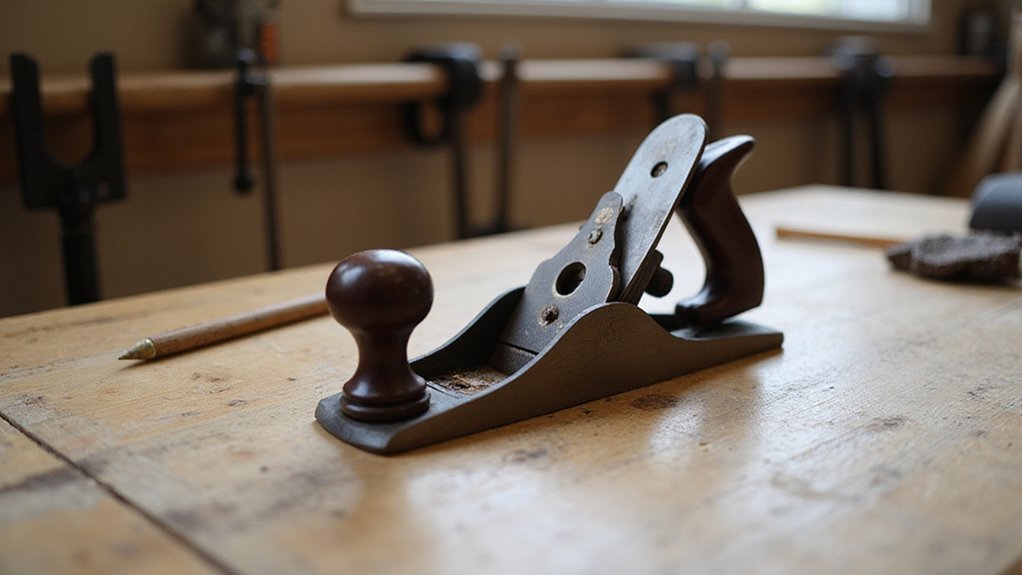
Choosing a jointer plane means focusing on five key traits, and blade material quality sits at the top of that list. You’ll also need to assess sole flatness accuracy and body weight balance, as a heavy, well-balanced tool makes those long strokes feel effortless. And don’t overlook the frog adjustment system or handle ergonomics, since fine-tuning the mouth and a comfortable grip can truly make or break your pairing experience.
Blade Material Quality
When you’re picking a jointer hand plane, the blade material is what really separates a workhorse from a disappointment. You want hardened steel, ideally rated between 54-58 HRc. That hardness means the blade retains its edge longer, giving you consistent, smooth cuts without constant re-sharpening. Cryogenically treated steel takes this further, offering even better durability. But there’s a trade-off: tougher steels are harder to sharpen, so you’ll likely need specialized tools. Still, that’s a small price for less frequent sharpening and fewer replacements. You’re investing in efficiency. Here’s what a quality blade delivers:
- Superior edge retention for demanding tasks.
- Reduced downtime from sharpening.
- Better corrosion resistance for longer life.
Don’t settle for a blade that dulls fast. A good one pays for itself.
Sole Flatness Accuracy
Because the sole is the foundation of every cut you make, its flatness determines whether you’re producing a perfect glue-ready edge or a frustrating, rocking mess. For a jointer plane, you need flatness within a few thousandths of an inch. That’s the difference between a board that’s true and one that’s tapered or bowed.
Precision-ground soles minimize uneven wear, so your plane maintains consistent contact with the workpiece. This means you correct high spots in fewer passes, and your joints look more professional. Check your sole regularly with a straight edge and feeler gauge. If you spot deviations, you’ll know it’s time for correction. A flat sole isn’t a luxury; it’s a necessity for smooth operation. Without it, you’re just fighting the tool instead of working with it.
Body Weight Balance
The balance of body weight in a jointer hand plane is one of those details you might overlook until you’ve spent an hour flattening a long board. Then your shoulders scream for mercy. A well-balanced plane reduces fatigue by distributing weight evenly, so you’re not fighting the tool all day. Heavier models provide natural downward pressure for smoother cuts, but they demand more oomph to push. Lighter planes boost maneuverability, making them ideal for delicate adjustments or tight spots.
Here’s the key: consistent weight balance guarantees even pressure across the sole. That means flatter, more accurate surfaces every time. When choosing, consider how long you’ll be planing. For big jobs, a mid-weight plane around 6 to 7 pounds strikes a sweet spot between heft and control. Your arms will thank you later.
Frog Adjustment System
Now, just like body weight balance keeps you from fighting the tool, the frog adjustment system is what keeps the blade itself from fighting the wood. You want precise control over the mouth opening, because that directly affects shaving thickness and smoothness. An adjustable frog lets you fine-tune cutting depth and angle quickly, without any disassembly. That’s a huge time saver.
Look for a high-quality mechanism that locks the frog securely. You don’t want lateral blade movement messing up your jointing. Some advanced systems use screw mechanisms or dovetail slots for repeatable, accurate settings. These aren’t just fancy extras; they’re essential for consistent results across different grain directions and wood surfaces.
Focus on stability and ease of adjustment. A system that feels sloppy or vague will fight you every time. But one that clicks into place with confidence? That’s pure joy to use.
Handle Ergonomics
First up when choosing a jointer hand plane is handle ergonomics. You’ll spend hours pushing this tool, so a comfortable grip isn’t just nice, it’s essential. An ergonomically designed handle reduces hand fatigue and boosts control during those long sessions. Look for handles made from smooth, comfortable materials like hardwood or enriched with cushioning. This prevents blisters and soreness, plain and simple.
Proper handle placement also gives you better leverage and pressure application. That means more precise planing with less effort. And don’t overlook adjustable or contoured handles. They accommodate different hand sizes and grip styles, enhancing your comfort markedly. A secure grip minimizes slipping, increasing safety during the planing process. So prioritize a handle that fits you like a glove. Your hands will thank you later!

Welcome to WoodCraftYard.com, your one-stop destination for all things woodworking! I’m Oliver Candler, a dedicated woodworking aficionado and the creative mind behind this virtual woodworking haven. With a deep-rooted love for craftsmanship and a keen eye for detail, I am on a mission to share my passion for woodworking with fellow enthusiasts like yourself.
As a seasoned woodworker, I am committed to providing you with valuable insights, practical tips, and inspiring project ideas to help you unleash your creativity and master the art of woodworking. Whether you’re a seasoned pro or just starting out on your woodworking journey, join me as we carve, sand, and saw our way through the world of woodworking together.
Let’s embark on this woodworking adventure, where every knot, grain, and finish tells a unique story. Together, let’s craft, create, and build something truly extraordinary at WoodCraftYard.com!