A sharp bandsaw blade is the key that releases a silky smooth cut, but a dull one just leaves you fighting the wood. You need tools that restore that edge without wrecking the blade, so let’s look at seven sharpeners built for precision and durability. From CBN wheels to dedicated sharpeners like the Wood-Mizer BMS25, you’ll find options that save time and deliver consistent results every pass.
| CBN Grinding Wheel for Bandsaw 5 inch |  | Best Value | Wheel Diameter: 5 inches | Bore/Arbor Size: 1/2 inch | Tooth Pitch Compatibility: 7/8 inch | VIEW LATEST PRICE | Read Our Analysis |
| 5 inch CBN Bandsaw Grinding Wheel,10/30,1/2″ Arbor |  | Top Rated | Wheel Diameter: 5 inches | Bore/Arbor Size: 1/2 inch (12.7mm) | Tooth Pitch Compatibility: 7/8 inch | VIEW LATEST PRICE | Read Our Analysis |
| National Band Saw – Sharpening Stone Set – OEM 213/214-A – Globe |  | Budget-Friendly Pick | Wheel Diameter: Not applicable (stone set) | Bore/Arbor Size: Not applicable (stone set) | Tooth Pitch Compatibility: Not specified | VIEW LATEST PRICE | Read Our Analysis |
| CBN Band Saw Sharpening Wheel for Wood Mizer |  | Best Overall | Wheel Diameter: 5 inches | Bore/Arbor Size: 1/2 inch (12.7mm) | Tooth Pitch Compatibility: 7/8 inch | VIEW LATEST PRICE | Read Our Analysis |
| 5″ CBN Wheel for Ripper37 Band Saws | 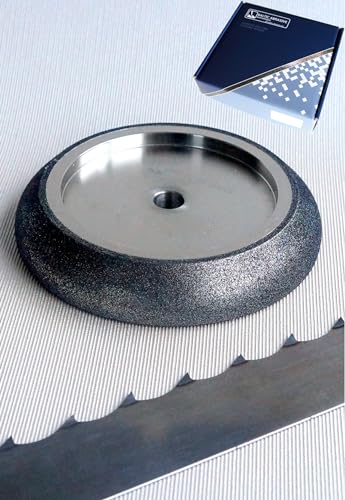 | Professional Grade | Wheel Diameter: 5 inches | Bore/Arbor Size: 1/2 inch (12.7mm) | Tooth Pitch Compatibility: 7-degree ripper profile | VIEW LATEST PRICE | Read Our Analysis |
| Wood-Mizer BMS25 Sawmill Bandsaw Blade Sharpener |  | Best For Beginners | Wheel Diameter: 5 inches | Bore/Arbor Size: Not specified | Tooth Pitch Compatibility: 7/8 inch | VIEW LATEST PRICE | Read Our Analysis |
| CBN Bandsaw Grinding Wheel 5-3/4 |  | Heavy-Duty Pick | Wheel Diameter: 5-3/4 inches | Bore/Arbor Size: 5/8 inch | Tooth Pitch Compatibility: Not specified | VIEW LATEST PRICE | Read Our Analysis |
More Details on Our Top Picks
CBN Grinding Wheel for Bandsaw 5 inch
If your sharpening setup already revolves around a Wood-Mizer BMS500, this 5-inch CBN wheel delivers serious bang for your buck. It’s designed for 7/8 inch tooth spacing with a 10/30 degree pitch, so it fits your machine’s specs perfectly. The super abrasive Cubic Boron Nitride construction resists deformation, even after long grinding sessions, and it runs cooler than traditional diamond wheels. You won’t need constant dressing or jig adjustments. Medium 150 grit keeps your blades sharp and consistent. Plus, its 1/2 inch bore and 0.88 inch thickness mean a simple swap in.
- Wheel Diameter:5 inches
- Bore/Arbor Size:1/2 inch
- Tooth Pitch Compatibility:7/8 inch
- Abrasive Material:CBN (Cubic Boron Nitride)
- Grit Type:Medium grit (150)
- Compatibility with Specific Machines:Wood-Mizer BMS500
- Additional Feature:Resistant to deformation
- Additional Feature:Reduced need for dressing
- Additional Feature:No constant jig adjustments
5 inch CBN Bandsaw Grinding Wheel,10/30,1/2″ Arbor
You’re a serious sawyer who values precision and efficiency. That’s why you’ll love this 5 inch CBN bandsaw grinding wheel with a 10/30 degree tooth angle and 1/2 inch arbor. It’s built for Wood-Mizer BMS500 sharpeners and tackles SilverTip, DoubleHard, and Bi-Metal blades with ease. The nickel-bonded CBN rim runs cool, so you get less heat and far less breakage. Plus, no dressing or dust clouds to deal with. One wheel grinds over 1,000 blades. That’s real longevity. And with a 4.9 star rating, you know it delivers.
- Wheel Diameter:5 inches
- Bore/Arbor Size:1/2 inch (12.7mm)
- Tooth Pitch Compatibility:7/8 inch
- Abrasive Material:CBN (Cubic Boron Nitride)
- Grit Type:Fine grit (180)
- Compatibility with Specific Machines:Wood-Mizer BMS500
- Additional Feature:Grinds over 1,000 bandsaws
- Additional Feature:No profile dressing needed
- Additional Feature:Reduced band saw breakage
National Band Saw – Sharpening Stone Set – OEM 213/214-A – Globe
Globe machine owners, listen up. You’ve got a specific need for your models like the 75, 150, or 285. This National Band Saw Sharpening Stone Set fits those exact OEM numbers 213 and 214-A. It includes both truing and grinding stones, so you can keep your blades razor sharp without a fuss. The medium grit aluminum stone measures about 2 inches by 2 inches and stands half an inch tall. It’s lightweight too, just over 2 ounces.
You’ll appreciate how it extends blade life and maintains consistent cuts. Satisfaction sits around 4.1 stars, and warranty support backs your purchase. If you spot a lower price elsewhere, let the supplier know they’ll review it.
- Wheel Diameter:Not applicable (stone set)
- Bore/Arbor Size:Not applicable (stone set)
- Tooth Pitch Compatibility:Not specified
- Abrasive Material:Aluminum oxide (stone)
- Grit Type:Medium grit
- Compatibility with Specific Machines:Globe models 75-4750
- Additional Feature:Includes truing and grinding stones
- Additional Feature:Compatible with 33 Globe models
- Additional Feature:Gray color finish
CBN Band Saw Sharpening Wheel for Wood Mizer
For Wood Mizer owners wanting a sharpener that stays true over time, this CBN wheel is your best shot at consistent cuts. It’s a 5-inch, electroplated steel core with nickel bonded Cubic Boron Nitride, so it grinds hundreds of blades without wearing out. You’ll get preset angles like 9/29 degrees for 7/8 inch pitch, meaning no reprofiling and minimal dust. It eliminates micro cracks and burning, extending blade life. Just mount it on your BMS250 or similar grinder. Need a different pitch? Contact Baltic Abrasive Technologies for custom sizes. No tariffs for US buyers either!
- Wheel Diameter:5 inches
- Bore/Arbor Size:1/2 inch (12.7mm)
- Tooth Pitch Compatibility:7/8 inch
- Abrasive Material:CBN (Cubic Boron Nitride)
- Grit Type:Not specified
- Compatibility with Specific Machines:Wood-Mizer BMS250 and similar
- Additional Feature:Pre-profiled tooth match
- Additional Feature:Eliminates micro cracks
- Additional Feature:No import tariffs for US
5″ CBN Wheel for Ripper37 Band Saws
If you’re after professional grade sharpening for Ripper37 blades, this 5″ CBN wheel is your best bet. It’s pre-matched to your tooth profile, so you won’t need any reprofiling. The heavy-duty electroplated rim with a steel core delivers high durability, grinding hundreds of blades without burning. This wheel also minimizes micro cracks, giving you smoother teeth and longer blade life. Dust free operation means less inhalation risk too. It fits Dakin-Flathers BMS250 and similar machines, with a 5 inch outside diameter and a half inch bore. For alloy steel blades, this is a smart, long lasting upgrade!
- Wheel Diameter:5 inches
- Bore/Arbor Size:1/2 inch (12.7mm)
- Tooth Pitch Compatibility:7-degree ripper profile
- Abrasive Material:CBN (Cubic Boron Nitride)
- Grit Type:Not specified
- Compatibility with Specific Machines:Dakin-Flathers BMS250 and similar
- Additional Feature:Pre-matched to tooth profile
- Additional Feature:Dust-free operation
- Additional Feature:No import tariffs for US
Wood-Mizer BMS25 Sawmill Bandsaw Blade Sharpener
Wood-Mizer BMS25 is a sharpener that makes sawmill blade maintenance straightforward for newcomers. You get a compact 60-pound unit with a durable stand, and it sharpens up to 30 teeth per minute. That means you’re keeping your blades cutting clean without a steep learning curve.
Here’s what you get: a 5-inch grinding wheel, a shaping tool, and a 7/8” tooth spacing with a 10°/30° blade profile cam for precision. It runs on a 12V battery (sold separately), so you can set it up anywhere in your shop. Rated 4.8 stars from 10 reviews, it’s a solid choice for sawmill work.
- Wheel Diameter:5 inches
- Bore/Arbor Size:Not specified
- Tooth Pitch Compatibility:7/8 inch
- Abrasive Material:Grinding wheel (material not specified)
- Grit Type:Not specified
- Compatibility with Specific Machines:Wood-Mizer BMS25
- Additional Feature:Sharpens up to 30 teeth/min
- Additional Feature:12V battery operation
- Additional Feature:Compact durable stand
CBN Bandsaw Grinding Wheel 5-3/4
This sharpening wheel is a heavy duty pick for anyone serious about maintaining sharp, consistent bandsaw blades. It’s a 5-3/4 inch diameter CBN wheel, with a 1/4 inch thickness and a 5/8 inch arbor hole, so it fits sharpeners like the Woodland Mills RS8, RS15, and RS30 PRO. The 80-grit Cubic Boron Nitride surface is incredibly hard and wear resistant, meaning you’ll get precise tooth profiles every time, even during high volume work. It handles up to 8,000 RPM, so you can push it hard. The steel core and continuous rim guarantee smooth grinding and long life. You’ll appreciate the predictable, consistent results across multiple blades.
- Wheel Diameter:5-3/4 inches
- Bore/Arbor Size:5/8 inch
- Tooth Pitch Compatibility:Not specified
- Abrasive Material:CBN (Cubic Boron Nitride)
- Grit Type:80 grit
- Compatibility with Specific Machines:Woodland Mills RS8, RS15, RS30 PRO
- Additional Feature:Maximum 8,000 RPM rated
- Additional Feature:Steel housing construction
- Additional Feature:Continuous rim design
Factors to Consider When Choosing a Bandsaw Blade Sharpener
Before you pick a sharpener, you need to match it to your blade type, as carbon steel and bi-metal blades demand different grinding wheel materials. Don’t overlook tooth pitch matching either; a fine-toothed blade needs a precise guide to avoid ruin, while a coarse skip tooth gives you more leeway. And finally, consider the machine’s motor power and ease of setup, because a weak motor or a fiddly assembly will turn sharpening into a chore instead of a quick win.
Blade Type Compatibility
Because a sharpener is only as good as the match it makes with your blade, compatibility is where you should start your search. First, verify it handles your blade profile: regular, bi-metal, or carbide-tipped. Check that the sharpening wheel matches your blade’s tooth pitch, like 7/8 inch, or you’ll ruin the geometry. Confirm the sharpener accommodates your blade’s thickness and width without damaging teeth. Verify it supports specific tooth angles, say 10/30 degrees or 9/29 degrees, to restore the original profile. Finally, make sure it handles your blade’s tooth count, up to 30 teeth, for uniform alignment. Don’t skip these details; a mismatch wastes time and blades. Get this right, and you’re set for clean cuts every time.
Grinding Wheel Material
Once you’ve nailed down a sharpener that matches your blade’s geometry, it’s time to think about what’s actually doing the cutting: the grinding wheel. Its material directly impacts cutting efficiency, durability, and heat control. You’ll want CBN (Cubic Boron Nitride) wheels for their extreme hardness and wear resistance. They deliver a fine, consistent finish and require less frequent dressing. That’s a huge time saver. Traditional options like diamond or aluminum oxide are more budget friendly but vary in suitability. Diamond excels for carbide tipped blades, while aluminum oxide works well for regular steel. But here’s the catch: you’ll need to dress those wheels more often to maintain performance. Choose based on your blade material and desired finish. Match the wheel to the job, and you’ll get cleaner cuts with less heat buildup. Your sharpener’s heart is that wheel, so pick wisely!
Tooth Pitch Matching
Matching the sharpener’s tooth pitch to your blade’s tooth spacing is non-negotiable if you want precise, consistent results. Say you run a 7/8-inch pitch; you need a sharpener that locks onto that exact spacing. Otherwise, you’re chasing uneven wear, and every tooth gets a slightly different profile. That ruins your cut quality faster than a dull blade.
Check the machine’s capacity for your specific pitch before buying. It should handle the 10/30-degree angles you’re restoring, too. When the pitch aligns perfectly, you’re maintaining the blade’s original geometry, not guessing. That means smoother cuts and a longer lifespan for your investment.
Machine Motor Power
How much horsepower does your sharpener really need? For typical woodworking, you’ll want at least 0.5 horsepower. This provides enough torque to grind and shape blades without stalling. Insufficient power leads to wheel slippage, uneven sharpening, and motor overheating. That kills both blade quality and machine longevity.
But if you’re handling high volume or industrial grade blades, step up to a stronger motor. More horsepower means quicker sharpening cycles, so you spend less downtime between blades and more time cutting. You can also look for adjustable speed settings. They let you optimize grinding precision based on blade material and thickness. Don’t skimp here: a weak motor frustrates you and ruins results. Choose power that matches your workload, and you’ll keep your blades sharp and your saw running smoothly.
Ease Of Setup
Strong motor power is only half the story. You’ll also want a sharpener that doesn’t fight you during setup. Look for clear, step-by-step instructions that walk you through installation without a headache. Simple mounting options are key: you shouldn’t need extra tools or complex adjustments. An intuitive user interface speeds up the process, letting you get to work faster.
To dial in your sharpener for your specific blade, choose a model with adjustable components. These let you precisely set the tooth profile, pitch, and angles. And don’t skip the alignment guidance. Good instructions will show you how to secure the blade for ideal sharpening performance. So, when you’re comparing options, prioritize ease of setup. It’ll save you frustration and get you cutting cleaner, sooner.
Durability And Longevity
Durability is where a sharpener either earns its keep or hits the scrap heap. You want one with a high-quality CBN or nickel-bonded electroplated rim. That’s the stuff that withstands extensive use without degrading.
A longer grinding wheel lifespan means you’re swapping it out less often. Look for a heavy-duty steel core. It prevents deformation and micro cracks, so your sharpening stays consistent session after session. Proper maintenance and cooling during sharpening also prevent heat-induced wear, extending that wheel’s effective life.
Choose a wheel with optimized abrasive grit and high wear resistance. It keeps performing at a high level, delivering clean cuts without slowdown. And you get sustained performance from a tool built to last, not one that wears out quickly under regular use.
Heat Management
And just as you want a sharpener that won’t wear out on you, you also need one that won’t cook your blade while it’s working. Heat management is critical here. Excessive temperature buildup weakens the blade material, causing tempering issues that ruin hardness and cutting efficiency.
You’ll want a sharpener using a grinding wheel made from CBN (Cubic Boron Nitride) instead of traditional diamond wheels. CBN generates less heat, plain and simple. Proper coolant or lubrication during sharpening also helps dissipate that heat, protecting each tooth from thermal damage.
Don’t overlook grinding speed and pressure either. Too fast or too heavy, and you’ll create unnecessary friction. Keep it controlled. A cool blade stays sharp longer, so pay attention to these details. Your cuts will thank you.
Profile Versatility
Since you’ll be using that sharpener for different cuts—from resawing hardwoods to fine metalwork—profile versatility is the secret sauce. You need a tool that handles raker, clearance, and hook angles without a fuss. Look for adjustable settings that fine-tune tooth pitches and profiles on the fly.
It should support multiple blade widths and thicknesses, so you’re not stuck with one-size-fits-all. Compatibility with bi-metal, carbide-tipped, and alloy steel blades is non-negotiable for genuine versatility. And don’t overlook reprofiling ability. You’ll want to reshape teeth from various manufacturers accurately.
A sharpener that adapts to different blade materials and tooth geometries saves you time and frustration. So prioritize models with adjustable attachments for those specific angle tweaks. That’s how you keep your cuts clean from start to finish.

Welcome to WoodCraftYard.com, your one-stop destination for all things woodworking! I’m Oliver Candler, a dedicated woodworking aficionado and the creative mind behind this virtual woodworking haven. With a deep-rooted love for craftsmanship and a keen eye for detail, I am on a mission to share my passion for woodworking with fellow enthusiasts like yourself.
As a seasoned woodworker, I am committed to providing you with valuable insights, practical tips, and inspiring project ideas to help you unleash your creativity and master the art of woodworking. Whether you’re a seasoned pro or just starting out on your woodworking journey, join me as we carve, sand, and saw our way through the world of woodworking together.
Let’s embark on this woodworking adventure, where every knot, grain, and finish tells a unique story. Together, let’s craft, create, and build something truly extraordinary at WoodCraftYard.com!