You might think any fence guarantees straight cuts, but a dull blade or slipping workpiece proves otherwise. These six jigs fix that with aluminum toughness, adjustable clamps, and rock-solid miter bar compatibility. Let’s see which one transforms your table saw into a precision machine.
| O’SKOOL Table Saw Taper Jig with 3 Adjustable Clamps and Aluminum Fence | 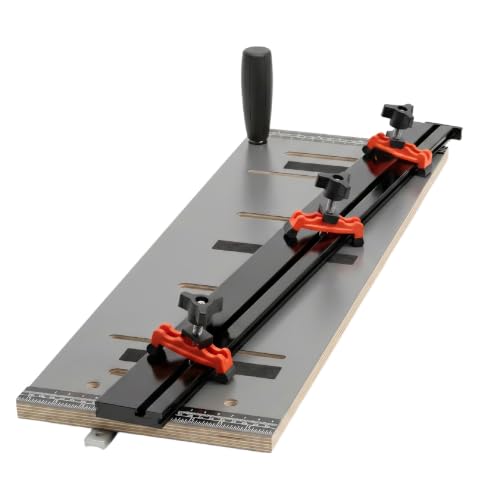 | Best Overall | Base Material: Birch plywood | Miter Bar Length: Adjustable (standard 3/4 x 3/8-inch slot) | Hold-Down Clamps: 3 adjustable clamps with abrasive grip strips | VIEW LATEST PRICE | Read Our Analysis |
| POWERTEC Taper/Straight Line Jig for Table Saws |  | Best Value | Base Material: MDF with melamine coating | Miter Bar Length: 36-inch aluminum | Hold-Down Clamps: Included hold-down clamps with abrasive grip strips | VIEW LATEST PRICE | Read Our Analysis |
| Woodpeckers Taper Sled TSL-32 |  | Professional Grade | Base Material: Honeycomb plywood | Miter Bar Length: 37-inch (two 18.5-inch bars) | Hold-Down Clamps: 2 knuckle hold-down clamps | VIEW LATEST PRICE | Read Our Analysis |
| POWERTEC Table Saw Tapering Jig (71035V) |  | Lightweight Pick | Base Material: Extruded aluminum | Miter Bar Length: Not specified | Hold-Down Clamps: Work stops (steel supports) | VIEW LATEST PRICE | Read Our Analysis |
| Rockler Taper Jig & Straight Line Wood Cutting for Table Saw 36″ Miter Bar | 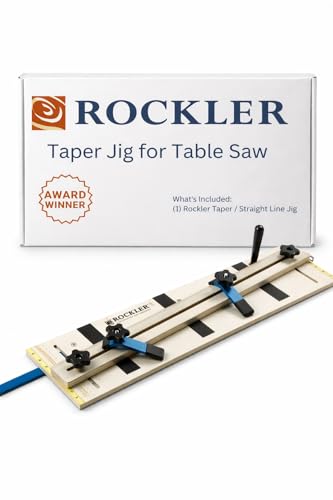 | Best Versatile | Base Material: Aluminum | Miter Bar Length: 36-inch | Hold-Down Clamps: Heavy-duty hold-down clamps | VIEW LATEST PRICE | Read Our Analysis |
| Taper Sled Jig for Table Saws |  | Budget-Friendly Pick | Base Material: Not specified | Miter Bar Length: 37-inch | Hold-Down Clamps: 2 hold-down clamps | VIEW LATEST PRICE | Read Our Analysis |
More Details on Our Top Picks
O’SKOOL Table Saw Taper Jig with 3 Adjustable Clamps and Aluminum Fence
You want a table saw jig that can handle both taper cuts and straight line ripping with rock solid precision. The O’SKOOL Taper Jig delivers exactly that. Its birch plywood base teams up with a rigid aluminum extrusion fence, killing flex and boosting stability. You get:
- A smooth tracking miter bar with expansion washers for zero wobble.
- Dual scale taper setup with Imperial, Metric, and Angle Indexing Dots. No guesswork, just dial in your angle fast.
- Three adjustable hold down clamps plus abrasive grip strips that lock your workpiece tight. Add the stop block on the fence face or side track, and you repeat matching parts consistently.
For heavy use and demanding cuts, this jig won’t let you down.
- Base Material:Birch plywood
- Miter Bar Length:Adjustable (standard 3/4 x 3/8-inch slot)
- Hold-Down Clamps:3 adjustable clamps with abrasive grip strips
- Straight-Line Ripping Capability:Yes, designed for straight-line ripping
- Fence Material:Rigid aluminum extrusion
- Angle Measurement System:Dual-scale with Imperial, Metric, and Angle Indexing Dots
- Additional Feature:Dual-scale taper setup
- Additional Feature:Recessed channel-secured scales
- Additional Feature:Adjustable stop block
POWERTEC Taper/Straight Line Jig for Table Saws
This jig delivers a lot of value without the high price. You get a 32-inch melamine coated MDF base that’s tough, plus a 36-inch aluminum miter bar for smooth sliding. It works for tapered cuts, straight line ripping, and angled work.
What’s inside the box?
- An adjustable fence with a tapered knob
- Hold down clamps with non marring caps
- Abrasive grip strips to stop workpiece drift
- A self adhesive tape measure
- Push knobs and T bolts
You set angles easily with indexing marks. Just verify your saw’s miter slot distance first, from 3 3/4 to 6 7/8 inches. This jig fits full sized saws like the DWE7491RS. It’s a solid, safe solution for furniture, shelves, or chair legs!
- Base Material:MDF with melamine coating
- Miter Bar Length:36-inch aluminum
- Hold-Down Clamps:Included hold-down clamps with abrasive grip strips
- Straight-Line Ripping Capability:Yes, functions as straight-line ripping jig
- Fence Material:Adjustable fence (material not specified)
- Angle Measurement System:Indexing marks on base
- Additional Feature:Melamine-coated MDF base
- Additional Feature:36-inch aluminum miter bar
- Additional Feature:Anti-slip ergonomic handles
Woodpeckers Taper Sled TSL-32
For professional grade precision, Woodpeckers Taper Sled TSL-32 is your best bet if you’re making tapered chair legs or straight line ripping rough stock. You get two 18.5-inch miter bars that slide into any 3/4 x 3/8 inch slot. The powder coated steel fence won’t deflect under clamp pressure, and its flip stop lets you repeat settings.
Components include:
- 32-inch honeycomb plywood sled with non-slip surface
- Two knuckle hold down clamps for thin or thick stock
- Rack It system for tidy organization
Built and inspected in Strongsville, Ohio, this sled’s scales sit exactly 24 inches apart for accurate angles. So you dial in tapers or joint edges straight, every time.
- Base Material:Honeycomb plywood
- Miter Bar Length:37-inch (two 18.5-inch bars)
- Hold-Down Clamps:2 knuckle hold-down clamps
- Straight-Line Ripping Capability:Yes, straight-line ripping of rough stock
- Fence Material:Powder-coated steel
- Angle Measurement System:Precise scales 24 inches apart
- Additional Feature:Honeycomb plywood sled
- Additional Feature:Rack-It storage compatible
- Additional Feature:T-Track connector miter bars
POWERTEC Table Saw Tapering Jig (71035V)
Tapering table legs or chair spindles gets dead simple with POWERTEC’s 71035V jig. You’ll love its lightweight extruded aluminum frame, which holds up to heavy use without rusting. The 24 inch adjustable rails let you set taper rates from 1 to 3 inches per foot, covering everything from 4.8 to 15 degrees. That laser engraved scale? It’s crystal clear, no squinting.
Key features that make it a winner:
- Ergonomic handle with textured rounded head for comfortable grip
- Steel work supports for rock steady stability
- Locking mechanisms that stay put during cuts
You can use it left or right handed, a nice touch. It’s roughly 24.5 inches long, perfect for furniture builds like table legs and chairs.
- Base Material:Extruded aluminum
- Miter Bar Length:Not specified
- Hold-Down Clamps:Work stops (steel supports)
- Straight-Line Ripping Capability:No (tapering only)
- Fence Material:Extruded aluminum with adjustable rails
- Angle Measurement System:Laser-engraved scale (0-15°)
- Additional Feature:Lightweight extruded aluminum
- Additional Feature:Laser-engraved degree scale
- Additional Feature:Left/right-handed operation
Rockler Taper Jig & Straight Line Wood Cutting for Table Saw 36″ Miter Bar
If your miter slot is between 3-3/4″ and 4-3/8″ from the blade, or 5″ to 5-5/8″, you’ve found a versatile tool. The Rockler Taper Jig also converts into a straight line ripping jig. Just remove the miter bar, and you’re set for stable, accurate cuts. You’ll appreciate its aluminum construction with black oxide finish, plus heavy duty hold down clamps that keep your workpiece secure. The 36 inch miter bar slides smoothly thanks to an ergonomic handle. For tapered cuts on chair or table legs, adjust the indexed angle system precisely. Expect quick, flawless results on common table saws!
- Base Material:Aluminum
- Miter Bar Length:36-inch
- Hold-Down Clamps:Heavy-duty hold-down clamps
- Straight-Line Ripping Capability:Yes, convertible by removing miter bar
- Fence Material:Aluminum with black oxide finish
- Angle Measurement System:Indexed angle setting system
- Additional Feature:Black oxide aluminum finish
- Additional Feature:Zero-clearance support option
- Additional Feature:Indexed angle setting system
Taper Sled Jig for Table Saws
This one’s a budget friendly pick that doesn’t skimp on precision. You get a 37” miter bar, two hold down clamps, and a steel fence with an ergonomic handle. It functions in two modes: tapering mode for angled cuts on chair legs or table legs, and straight line mode for precise ripping when you remove the miter bar.
It fits snugly in standard 3/8” x 3/4” miter slots, and it’s compatible with saws where the left edge of the right miter slot measures 3-3/4” to 4-3/8” or 5” to 5-5/8” from the blade. Setup is straightforward: use it in the slot right of the blade, and your initial cuts will remove a narrow piece to create zero clearance support. Simple indexed angle settings keep your cuts accurate, and the heavy duty clamps hold work securely. It weighs just 10.15 pounds, so it’s manageable to store.
- Base Material:Not specified
- Miter Bar Length:37-inch
- Hold-Down Clamps:2 hold-down clamps
- Straight-Line Ripping Capability:Yes, when miter bar removed
- Fence Material:Steel
- Angle Measurement System:Simple indexed angle setting system
- Additional Feature:37-inch miter bar
- Additional Feature:Steel fence construction
- Additional Feature:Red-colored sled design
Factors to Consider When Choosing a Table Saw Jig Straight Edge
When you’re choosing a straight edge jig for your table saw, you’ll want to focus on five key factors. Material composition affects durability, while angle adjustment range and the workholding clamp system determine how versatile and secure your cuts will be. And don’t overlook miter slot fitment and base stability, as these guarantee your jig tracks straight and stays solid through every pass.
Material Composition
Since material composition directly affects how straight your cuts stay over time, you’ll want to weigh durability and rigidity first. Aluminum straight edges hit a sweet spot: lightweight enough for easy handling, yet strong enough to resist flex. Steel edges, however, are your heavy lifter. They’re more resistant to warping and denting, ideal for demanding tasks where precision can’t slip. Plastic or composite options come cheaper, but you’ll sacrifice rigidity. They’re prone to wear and may bow under pressure, so don’t rely on them for high accuracy.
For lasting straightness, you need a material that holds its shape. Aluminum offers a good balance of portability and stability. Steel sacrifices weight for unmatched toughness. Plastic works for light duty, but expect it to degrade faster. Choose based on what you’re cutting daily. A rigid edge means repeatable results, plain and simple.
Angle Adjustment Range
How much range do you really need? The angle adjustment range decides the maximum and minimum taper or bevel angles your jig can accurately cut. A wider range gives you greater versatility for creating various angled cuts on different workpieces. But don’t assume bigger is always better. If you primarily cut standard angles like 45 or 90 degrees, a jig with a limited range might suit you just fine. However, if you’re tackling custom furniture or complex joinery, look for a jig with a broad sweep.
Check the scale or graduated markings too; they should clearly indicate each angle for precise, repeatable settings. You don’t want to guess when dialing in a perfect taper. Also, consider how easy it is to adjust within that range. A smooth, intuitive mechanism saves you time and frustration during your workflow. Pick a jig that matches your project needs, not just the flashiest numbers on the box!
Workholding Clamp System
Getting the perfect angle range on your jig is one thing, but if your workpiece shifts mid cut, all that precision is wasted. That’s where a rock solid workholding clamp system saves the day. You want adjustable clamps with abrasive grip strips; they bite into wood and stop any unwanted sliding. Look for clamps that are easy to tweak for different board sizes, offering consistent pressure every time.
Multiple hold down points are non negotiable here. They prevent your workpiece from lifting or creeping during straight or tapered cuts. And since you’ll use this jig often, choose clamps made from steel or reinforced aluminum. They won’t bend or fail under repeated use. For efficiency, grab a system with quick release or tool free mechanisms. You’ll switch workpieces faster and safer. That’s a solid setup for flawless cuts.
Miter Slot Fitment
While you’ve locked your workpiece down tight with a solid clamp system, that effort means nothing if the jig itself doesn’t fit your saw’s miter slot perfectly. You need a snug, precise match, typically for a 3/4″ wide by 3/8″ deep slot, to avoid dangerous wobble. A loose fit introduces play, ruining cut accuracy; too tight causes binding or slipping, inviting accidents.
Look for jigs with adjustable miter bars. Many use expansion washers or tension mechanisms so you can customize fitment for your specific saw. Before buying, verify the distance between your slots and the bar’s dimensions. Don’t guess here. A proper fit isn’t optional, it’s the foundation for stable, repeatable cuts. Get this wrong, and your straight edge turns into a guessing game. Get it right, and you’ll feel the difference immediately.
Base Stability & Support
With your jig locked into the miter slot perfectly, it’s time to turn your attention to the base itself, because even the best-fitting bar can’t save you if the platform wobbles under pressure. A flimsy base flexes mid-cut, and you’ll chase accuracy all day. So, what makes a base rock-solid?
- Material matters: Go for thick plywood or machined metal. Thin stuff bends; quality stays put.
- Flat and wide: A broad, flat footprint spreads weight evenly, killing wobble before it starts.
- Proper anchoring: Use clamps or integrated fasteners to pin it down firmly; a loose base invites vibration.
Don’t ignore deflection, especially on longer workpieces. You need that platform to stay true from start to finish. Choose a base that feels like it’s part of the saw, not something riding on top. That’s how you get flawless results.
Scaled Measurement Accuracy
Scaled measurement accuracy is where the precision of your jig really shines, and it’s a game changer for reducing waste and mistakes. You’ll want a jig with dual scales (Imperial and Metric) plus angle indexing for versatile, exact adjustments. Look for recessed or securely held scales, so they don’t shift during operation. Finely etched or laser-engraved markings offer clear reading and better precision, critical for repeatability when you’re cranking out multiple identical parts.
Key factors to check:
- Scale types: Imperial for US work, Metric for imports, and angle markings for bevels.
- Scale security: Recessed mount prevents movement; avoid stick-on decals.
- Marking quality: Laser engravings beat stamped ones for legibility and longevity.