You’re fine-tuning your cuts, but your bandsaw blade might be holding you back. The wrong tooth count or material leads to tear out and wandering lines. Let’s fix that. Here are seven blades built for smooth, precise results on everything from thick resaws to delicate veneers.
| POWERTEC Bandsaw Blades Assortment 3-Pack (13603) |  | Best Versatility | Blade Length: 93.5 inches | Blade Width: 1/8″, 1/4″, 1/2″ (assortment) | Teeth Per Inch (TPI): 6 TPI, 14 TPI, 6 TPI (assortment) | VIEW LATEST PRICE | Read Our Analysis |
| Timber Wolf Bandsaw Blade 111″ X 1/2″ 4Tpi |  | Best Resawing | Blade Length: 111 inches | Blade Width: 1/2 inch | Teeth Per Inch (TPI): 4 TPI | VIEW LATEST PRICE | Read Our Analysis |
| Timber Wolf Veneer Resawing Band Saw Blade 111″ * 1/2′ x 3/4 VPC |  | Best Veneer Slicing | Blade Length: 111 inches | Blade Width: 1/2 inch | Teeth Per Inch (TPI): 3/4 TPI | VIEW LATEST PRICE | Read Our Analysis |
| SK5 Carbon Steel Bandsaw Blade 3-Pack |  | Best Value | Blade Length: 93.5 inches | Blade Width: 1/8″, 1/4″, 1/2″ (assortment) | Teeth Per Inch (TPI): 6 TPI, 6 TPI, 14 TPI (assortment) | VIEW LATEST PRICE | Read Our Analysis |
| TASP 80″ Bandsaw Blades Set (3-Pack) |  | Budget-Friendly Pick | Blade Length: 80 inches | Blade Width: 1/8″, 1/4″, 1/2″ (assortment) | Teeth Per Inch (TPI): 14 TPI, 6 TPI, 6 TPI (assortment) | VIEW LATEST PRICE | Read Our Analysis |
| Timber Wolf Bandsaw Blade 111″ X 3/4″ 3Tpi |  | Professional Grade | Blade Length: 111 inches | Blade Width: 3/4 inch | Teeth Per Inch (TPI): 3 TPI | VIEW LATEST PRICE | Read Our Analysis |
| Timber Wolf Bandsaw Blade 3/4″ X 131.5″ 2-3 TPI |  | Best For Thick Stock | Blade Length: 131.5 inches | Blade Width: 3/4 inch | Teeth Per Inch (TPI): 2-3 TPI (variable) | VIEW LATEST PRICE | Read Our Analysis |
More Details on Our Top Picks
POWERTEC Bandsaw Blades Assortment 3-Pack (13603)
The POWERTEC Bandsaw Blades Assortment 3-Pack (13603) gives you a versatile trio for everyday woodworking. You get three 93.5-inch blades: a 1/2-inch, 6TPI for aggressive re-sawing and rip cuts; a 1/8-inch, 14TPI for those tight, intricate curves; and a 1/4-inch, 6TPI for general crosscuts and curves. Made from premium carbon steel, each blade’s teeth are hardened to RC 64-66, so they stay sharp and resist heat. The welds are guaranteed, ensuring proper spacing and straight cuts at high speeds. It’s a solid, ready-to-go set for hard woods, soft woods, plastic, or non-ferrous metals.
- Blade Length:93.5 inches
- Blade Width:1/8″, 1/4″, 1/2″ (assortment)
- Teeth Per Inch (TPI):6 TPI, 14 TPI, 6 TPI (assortment)
- Material:Premium high-grade carbon steel
- Blade Thickness:Not specified
- Primary Application:Woodworking (re-sawing, rip cuts, cross cuts, curves)
- Additional Feature:Teeth hardened to RC 64-66
- Additional Feature:Guaranteed welds for tooth spacing
- Additional Feature:Premium high-grade carbon steel
Timber Wolf Bandsaw Blade 111″ X 1/2″ 4Tpi
You’re tackling thick stock, so grab the Timber Wolf 111″ x 1/2″ with 4 TPI. This blade’s built for resawing, crafted from high silicon, low carbide steel so it runs cooler and lasts longer. Its 0.025-inch thin kerf means efficient cutting, and the round gullet design? No work hardening zones. You get over 60% of hook blade speed with a finish as fine as skip blades. Plus, it requires less horsepower, saving your saw’s wear. With a 4.6-star rating, it’s a durable, clean-cutting workhorse that won’t quit.
- Blade Length:111 inches
- Blade Width:1/2 inch
- Teeth Per Inch (TPI):4 TPI
- Material:High silicon, low carbide steel
- Blade Thickness:0.025 inches
- Primary Application:Resawing thick wood stock
- Additional Feature:Round gullet design
- Additional Feature:6.5° rake angle
- Additional Feature:5-tooth set pattern
Timber Wolf Veneer Resawing Band Saw Blade 111″ * 1/2′ x 3/4 VPC
For anyone slicing ultra thin veneers from kiln dried hardwoods, the Timber Wolf Veneer Resawing Blade delivers veneer slicing that’s smooth and precise. Its variable positive claw tooth design with a 6.5° hook angle makes quick work of 1 to 8 inch stock, and you’ll love that .025 inch blade thickness keeps kerf tight at .039 inch. This 111 inch blade handles gentle curves down to a 2.5 inch radius, too. Stick to kiln dried lumber though. Wet wood over 10% moisture will dull it fast. And those five raker set teeth? They clear chips beautifully, giving you whisper thin veneers without a hitch.
- Blade Length:111 inches
- Blade Width:1/2 inch
- Teeth Per Inch (TPI):3/4 TPI
- Material:Stainless steel
- Blade Thickness:0.025 inches
- Primary Application:Veneer resawing, ripping, gentle curves
- Additional Feature:Variable positive claw design
- Additional Feature:2-1/2 inch cutting radius
- Additional Feature:Not for wet wood over 10%
SK5 Carbon Steel Bandsaw Blade 3-Pack
Dartotek’s 3-pack covers nearly every cut you’ll throw at it. You get three blades for your 14-inch band saw: a 1/2” 6TPI for smooth resawing, a 1/4” 6TPI for general cuts, and a 1/8” 14TPI for those tight, intricate curves. They’re built from SK5 carbon steel with precision-welded joints and heat treatment, so they stay sharp longer and resist breakage. The optimized tooth geometry minimizes vibration, delivering clean cuts in softwoods, hardwoods, plastics, and composites. Just verify your saw’s blade length before buying.
- Blade Length:93.5 inches
- Blade Width:1/8″, 1/4″, 1/2″ (assortment)
- Teeth Per Inch (TPI):6 TPI, 6 TPI, 14 TPI (assortment)
- Material:SK5 carbon steel
- Blade Thickness:Not specified
- Primary Application:Woodworking (resawing, general cuts, tight curves)
- Additional Feature:SK5 carbon steel construction
- Additional Feature:Precision-welded joints
- Additional Feature:Advanced heat treatment
TASP 80″ Bandsaw Blades Set (3-Pack)
If you need a reliable blade set that won’t break the bank, this TASP 80-inch three pack is your budget-friendly pick. You get three carbon steel blades: a 1/8-inch with 14 TPI for tight curves, plus 1/4-inch and 1/2-inch blades at 6 TPI for ripping and re-sawing. They handle hardwoods, softwoods, plastics, and even non-ferrous metals. Installation’s a breeze, and the heat-resistant welds hold up under pressure. With a stellar 4.8-star average from 14 reviews, this set delivers versatile, smooth cuts without the premium price tag.
- Blade Length:80 inches
- Blade Width:1/8″, 1/4″, 1/2″ (assortment)
- Teeth Per Inch (TPI):14 TPI, 6 TPI, 6 TPI (assortment)
- Material:High-quality carbon steel
- Blade Thickness:0.014 to 0.02 inches
- Primary Application:Woodworking (re-sawing, rip cuts, cross cuts, curves)
- Additional Feature:Heat-resistant weld integrity
- Additional Feature:Fits 12-inch Craftsman saws
- Additional Feature:Fits Sears 20-inch saws
Timber Wolf Bandsaw Blade 111″ X 3/4″ 3Tpi
This blade is a resawing powerhouse. You’ll tackle thick stock with confidence, thanks to its 3 TPI and thin .025 inch kerf. It’s built from high silicon, low carbide steel, so it lasts longer than traditional carbon steel blades. You get a smooth finish because its round gullet design eliminates work hardening zones. And it doesn’t hog your bandsaw’s power. It runs cool under low tension, reducing wear on your bearings and tires. You’re getting over 60% of a hook blade’s speed, but with the finish of a skip tooth. It’s a smart upgrade for serious resawing.
- Blade Length:111 inches
- Blade Width:3/4 inch
- Teeth Per Inch (TPI):3 TPI
- Material:High silicon, low carbide steel
- Blade Thickness:0.025 inches
- Primary Application:Resawing thick stock
- Additional Feature:Low tension operation
- Additional Feature:Reduces bearing/shaft wear
- Additional Feature:6.5° rake angle
Timber Wolf Bandsaw Blade 3/4″ X 131.5″ 2-3 TPI
You’re resawing thick stock, right? Then grab the Timber Wolf 3/4” x 131.5”, 2-3 TPI blade. It’s built with premium Swedish steel and induction hardened, so it runs cooler and lasts longer than cheaper options. Those milled teeth? They’re 50% sharper than stamped blades, and 20% harder than high-carbon steel. The variable pitch, positive claw design reduces chatter, delivering a near-polished finish on boards up to 12 inches wide. Perfect for kiln or air dried lumber. And with a 4.6 star rating from 217 reviews, you’re getting a best seller that cuts straight every time.
- Blade Length:131.5 inches
- Blade Width:3/4 inch
- Teeth Per Inch (TPI):2-3 TPI (variable)
- Material:Premium Swedish steel
- Blade Thickness:Not specified
- Primary Application:Straight-line resawing
- Additional Feature:Premium Swedish steel
- Additional Feature:Proprietary induction hardening
- Additional Feature:Non-stamped milled teeth
Factors to Consider When Choosing Band Saw Blades for Resawing
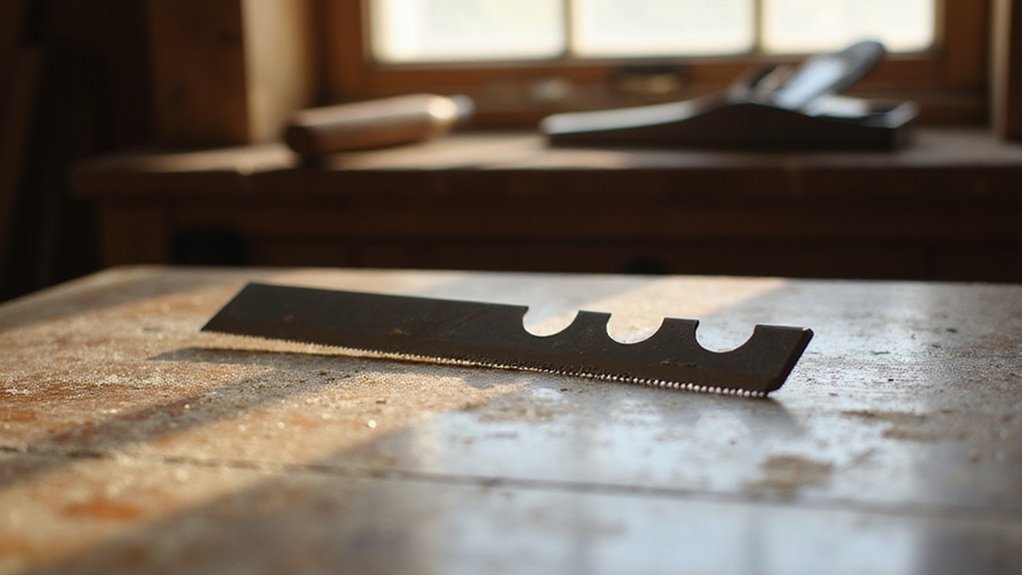
You’ve got to match your blade to the job for resawing success. Start with blade width selection, because wider blades track straighter and resist deflection, but make certain it fits your saw. Then consider tooth pitch, material quality, kerf thickness, and tooth geometry, as these directly affect cut smoothness and waste.
Blade Width Selection
Why does blade width matter so much for resawing? Simple: it’s your cut’s backbone. A wider blade, say 3/4 inch or more, delivers rock-solid stability and slashes vibration. That means you get straighter, more accurate cuts every time, especially on thick stock. You’ll avoid that frustrating blade wander or buckling.
But if you’re after tight curves, don’t grab a wide blade. Narrower ones, like 1/8 inch or 1/4 inch, give you maneuverability for intricate work. They just demand a steadier hand and more control.
Here’s the quick guide:
- Wide blades (3/4 inch+): Best for straight resawing, thick or hard materials. They offer durability and reduced vibration.
- Narrow blades (1/8 inch to 1/4 inch): Perfect for tight radius curves, but less stable for long cuts.
Match your blade width to your bandsaw’s throat capacity and your job’s demands. Pick wisely, and you’ll cut with confidence.
Tooth Pitch Choices
Three key factors guide your tooth pitch choice: wood thickness, density, and cut type. For resawing thick stock, you’ll want a lower tooth pitch around 2 to 3 TPI. This helps remove material fast and reduces binding, so you avoid vibration and blade fatigue. Thinner, delicate veneers call for a higher pitch, like 14 TPI, though that’ll slow you down on bulkier pieces.
For best results, stick with 2 to 4 TPI. That range balances cutting speed with smoothness, giving you clean surfaces without sacrificing efficiency. Don’t grab a blade with too many teeth for resawing. You’ll end up with rougher cuts and excess strain on your saw.
Remember: thicker, denser wood needs fewer teeth per inch. Match that pitch, and you’re set for effortless resawing every time.
Material Composition Quality
Once you’ve matched the tooth pitch to your wood thickness and cut type, the next big factor is what the blade is actually made of. For resawing, you want a blade built from premium materials like high-grade carbon or alloy steel. These compositions resist wear, heat, and breakage during heavy use. Proper heat treatment, such as induction hardening, boosts the blade’s hardness, keeping it sharp for longer cuts. And if you’re tackling both softwoods and kiln-dried hardwoods, a refined steel blade handles the density swings without dulling fast.
Look for blades that mention induction hardening or alloy construction. Here’s what to prioritize:
- High-grade carbon steel for durability in varied wood types.
- Alloy or stainless steel for extra resistance to tough shock loads.
Thinner kerf blades made from these refined steels also reduce waste and require less power, so your saw works more efficiently. That’s the material payoff!
Kerf Thickness Impact
How much blade is actually slicing through your wood matters just as much as the teeth and steel. For resawing, that’s your kerf thickness. A thinner kerf, around 0.025 inches, is your best friend for thick or hard woods. It wastes less material, requires less power, and reduces cutting resistance, which means smoother cuts and less strain on your bandsaw’s motor, especially if you’re using a smaller machine. The result? Finer, more precise cuts that often need little to no additional finishing.
But don’t dismiss thicker kerf blades, those 0.035 inches or more. They offer increased stability and durability, considerably reducing the risk of blade deflection during demanding resawing tasks. The trade off? They produce more heat and wear faster, shortening the blade’s lifespan with repetitive use. So choose based on your priority: precision and efficiency or stability and brute force.
Tooth Geometry Design
Because tooth geometry is where a bandsaw blade really earns its keep during resawing, you need to pay close attention to the shape and angle of those teeth. For thick stock, a lower TPI of 2 to 3 gives you aggressive, fast cuts. You’ll also want a positive tooth set pattern, like VPC or raker sets. These designs reduce vibration and stabilize the blade, giving you smoother cuts through dense or hard materials.
Consider the rake angle and gullet design. A steeper angle removes chips faster, but you need a deep enough gullet to prevent clogging. That’s essential for clean, efficient cutting in various wood types. Plus, look at tooth material: induction hardened or high carbon steel teeth are durable and hold their sharpness longer. So, don’t overlook these details; they directly impact your cut’s finish and speed.
Compatibility With Saws
Now that you’ve tuned into tooth geometry, it’s time to look at the bigger picture: your saw itself. Compatibility isn’t just a suggestion; it’s a requirement. Start with length. Most resaw tasks need a blade either 93-1/2 or 111 inches. Double check your manual because a mismatch won’t fit. Next, match width and TPI to your saw’s blade guides. A blade too wide will bind, too narrow won’t track. Also confirm the mounting system and tension range your saw allows. Your motor’s power matters too. A thick, aggressive blade needs more torque; insufficient tension leads to drift. Consider kerf and tooth pattern for specific cuts. And don’t forget brand specifics. Some saws demand proprietary designs for maximum performance. Get these factors right, and you’ll liberate your saw’s true resawing potential!