If you’re in the market for a metal cutting band saw, you’ll find an overwhelming number of options. From industrial powerhouses to portable units, each model offers distinct features that can make or break your metalworking projects. While price matters, it’s not the only factor you’ll need to weigh. Let’s explore five outstanding band saws that stand apart from the competition and uncover which one matches your specific needs.
KAKA INDUSTRIAL Metal Cutting Band Saw BS-712N
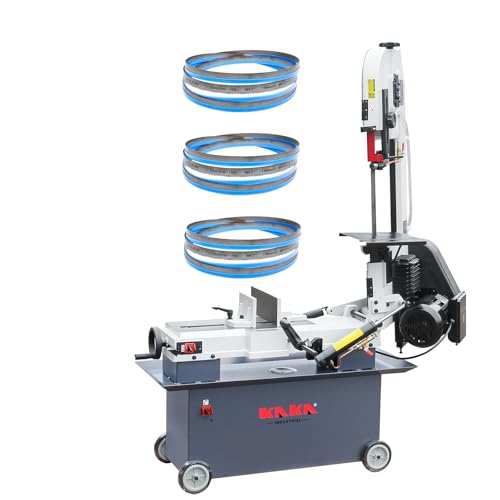

If you’re running a professional metalworking shop, the KAKA INDUSTRIAL BS-712N delivers exceptional value with its 1.5HP motor and versatile 4-speed settings. You’ll appreciate its robust cast iron base that minimizes vibration for precise cuts on various materials.
The saw comes with three bi-metal blades and an integrated coolant system for continuous operation. You’ll find the 45° swivel vise plate particularly useful for securing irregular shapes like I-beams. While the hydraulic downfeed might need initial adjustment, and some users report missing coolant strainer hardware, the machine’s overall performance and durability make it a solid choice. U.S.-based support and a one-year warranty provide added peace of mind.
Best For: Professional metalworking shops and fabricators requiring precise cuts across various materials with heavy-duty, continuous operation capabilities.
Pros:
- Powerful 1.5HP motor with 4-speed settings allows versatile cutting across different metals
- Heavy-duty cast iron base minimizes vibration for precise cuts
- Includes three bi-metal blades and integrated coolant system for extended operation
Cons:
- Hydraulic downfeed system may require initial adjustments
- Some users report missing hardware for coolant strainer
- Heavy 400-pound weight makes movement and installation challenging
Rikon 4In X 6In Metal Cutting Bandsaw

The Rikon 4In X 6In Metal Cutting Bandsaw packs impressive versatility into a lightweight frame, making it perfect for DIY enthusiasts and small shop owners who need both horizontal and vertical cutting capabilities.
You’ll appreciate its 3/4HP motor with three blade speeds (80, 120, and 180 FPM) that efficiently cuts through brass alloys and stainless steel. While it’s not as precise as larger models, you can achieve cuts within 0.01-0.015 accuracy. The 5-year warranty backs its durability, and users report cutting thousands of parts on a single blade. Assembly is straightforward, though you might need minor adjustments to optimize performance. For dry cutting operations, you’ll find this saw delivers reliable results.
Best For: DIY enthusiasts and small shop owners needing a versatile metal cutting bandsaw for light to medium-duty projects requiring both horizontal and vertical cutting capabilities.
Pros:
- Versatile horizontal and vertical cutting options with three blade speeds
- Lightweight and mobile design with good accuracy for its size class
- Long blade life and reliable performance with 5-year warranty coverage
Cons:
- Less precise than larger, heavier bandsaws
- May require initial adjustments to optimize performance
- Some users report shipping damage and vibration issues
Klutch Benchtop Metal Cutting Band Saw (400W)

Professional craftsmen seeking a compact yet capable metal cutting solution will find the Klutch Benchtop Band Saw an attractive option. At just 52 pounds, this 400W powerhouse handles 5-inch round stock and delivers variable speeds from 125-260 FPM.
You’ll appreciate its versatility with beveling cuts up to 60 degrees and its efficient performance on mild steel and aluminum. The bi-metal blade and brushless motor guarantee reliable operation, while the adjustable blade tension system enhances cutting precision. Though it’s best suited for light to medium-duty tasks, you’ll get excellent value for home workshops and small job sites.
Best For: Hobbyist metalworkers and small workshop owners seeking a compact, versatile band saw for light to medium-duty metal cutting projects.
Pros:
- Lightweight and compact design at 52 pounds makes it ideal for small workspaces
- Versatile cutting capabilities with 0-60° beveling and variable speed control
- Well-suited for cutting both mild steel and aluminum with good precision
Cons:
- Limited power output may struggle with heavier cutting tasks
- Some users report issues with initial blade quality
- Speed response delays reported during operation
KAKA INDUSTRIAL Horizontal Metal Cutting Bandsaw BS-712N

Metalworkers seeking a versatile bandsaw will find exceptional value in KAKA INDUSTRIAL’s BS-712N model, which delivers clean cuts across materials ranging from soft aluminum to hard stainless steel.
You’ll appreciate the 1.5HP dual voltage motor and 4-speed blade system (80-200 FPM), paired with hydraulic feed control for consistent pressure. The swivel base enables angled cuts up to 45°, while the built-in coolant system extends blade life. With a 7×12-inch rectangular and 7-inch round cutting capacity, it’s ideal for structural fabrication. Despite its hefty 400-pound weight and occasional hydraulic issues, the BS-712N’s precision and efficiency make it a solid choice for serious metalworking projects.
Best For: Professional metalworkers and fabrication shops needing a reliable, precise bandsaw for diverse materials and angular cuts up to 45 degrees.
Pros:
- Versatile 4-speed blade system handles multiple materials from aluminum to stainless steel
- Built-in coolant system and hydraulic feed control ensure consistent, clean cuts
- Large cutting capacity (7×12″ rectangular, 7″ round) with ability to make angled cuts
Cons:
- Heavy 400-pound weight makes mobility challenging
- Reported issues with hydraulic piston functionality
- Customer service could be more responsive to technical support needs
Anbull Portable Band Saw with Removable Alloy Steel Base

Versatile cutting capability meets powerful performance in the Anbull Portable Band Saw, making it ideal for contractors who need both precision and portability. You’ll get a robust 1100W copper motor that powers through various materials with its 6-speed control system ranging from 100-350 feet per minute.
The removable alloy steel base lets you switch between handheld and stationary cutting, with impressive capacities of up to 5 inches for round stock. You’ll appreciate the LED spotlight and ergonomic grip for enhanced visibility and comfort. The saw accepts multiple blade types and includes speed recommendations for different materials, ensuring you’ll get excellent cuts every time.
Best For: Professional contractors and serious DIY enthusiasts who need a versatile band saw capable of both portable and stationary cutting operations with precise control over various materials.
Pros:
- Powerful 1100W motor with 6-speed control system for versatile cutting applications
- Convenient dual-use design with removable base for both handheld and stationary operation
- Large cutting capacity of up to 5 inches with LED spotlight for improved visibility
Cons:
- Relatively heavy at 14.6 pounds, which may cause fatigue during extended handheld use
- Blade installation process can be complex for beginners
- Base clamp system reported to be inadequate by some users
Factors to Consider When Choosing a Band Saw for Metal Cutting
When selecting a metal-cutting band saw, you’ll need to evaluate essential technical features that affect performance and usability. You should assess the motor’s power rating and cutting capacity, multiple blade speed settings, and the saw’s compatibility with various metal types and thicknesses. Consider practical aspects like the machine’s footprint in your workspace and whether it includes an effective cooling system to prevent overheating during operation.
Motor Power and Capacity
Selecting the right motor power and capacity stands as a critical decision in your band saw purchase. You’ll want to focus on motors ranging from 0.75HP to 1.5HP, with higher capacities offering faster cutting speeds and the ability to handle denser materials.
For versatility in your workspace, look for a dual voltage motor that’ll work in both residential and industrial settings. You’ll need to match the motor power to your cutting requirements, considering blade speeds between 75 and 400 feet per minute. Pay attention to the saw’s cutting capacity specifications, which determine the maximum width and height of materials you can process. If you’re planning heavy-duty work, consider models with hydraulic feed control, as they’ll provide consistent cutting pressure and cleaner results.
Blade Speed Options
Beyond motor specifications, blade speed capabilities directly impact your metal cutting precision and efficiency. You’ll want a band saw that offers variable speeds ranging from 75 to 270 FPM to handle different materials effectively.
When you’re cutting tough materials like stainless steel, you’ll need lower speeds around 80 FPM to protect your blade and achieve clean cuts. For softer metals like aluminum, medium speeds between 120 and 180 FPM will give you ideal results. Look for a saw with easily adjustable speed settings so you can fine-tune based on material thickness and type. The right speed control doesn’t just improve cut quality – it also prevents overheating and extends your blade’s lifespan, saving you money on replacements over time.
Material Cutting Compatibility
A band saw’s material cutting compatibility determines its overall versatility and performance in your workshop. You’ll need to match your saw’s capabilities with the types of metals you’ll be cutting most frequently. While some models excel at cutting structural steel and aluminum alloys, others are better suited for softer metals like brass and mild steel.
To guarantee peak cutting performance, you’ll want to check the available blade options and TPI configurations for your intended materials. Bi-metal and high-speed steel blades offer different advantages depending on material density and thickness. When working with harder metals, look for a saw with an integrated coolant system to prevent overheating and extend blade life. Don’t forget to verify the saw’s cutting capacity matches your material dimensions for both rectangular and round stock.
Size and Space Requirements
While matching your band saw’s cutting capabilities to your materials is essential, the physical space requirements deserve equal attention in your decision-making process. You’ll need to take into account that some models can weigh up to 400 pounds and require substantial floor space for safe operation.
Measure your available workspace carefully, accounting for the saw’s dimensions and additional clearance needed for materials up to 7×12 inches in size. If you’re working in a small shop or need mobility, think about a benchtop or portable model instead of a larger stationary unit. Don’t forget to factor in the saw’s orientation – horizontal or vertical cutting capabilities will affect its positioning. For maximum flexibility in tight spaces, look for features like swivel bases or compact designs that’ll help you make angled cuts efficiently.
Cooling System Type
Because metal cutting generates significant heat, choosing the right cooling system for your band saw is essential for both performance and longevity. You’ll want to look for a saw with an integrated coolant system that can effectively dissipate heat during operation, preventing blade damage and ensuring precise cuts without thermal distortion.
Consider a model with a built-in coolant reservoir that’ll support continuous operation during heavy-duty tasks. It’s important to check if the cooling system includes filtration features to keep the coolant clean and extend both coolant and blade life. You’ll also benefit from a system that helps manage metal shavings and debris, making your workspace cleaner and safer. The right cooling setup won’t just protect your investment – it’ll improve your cutting quality and efficiency.
Precision Control Features
Precision control features make the difference between mediocre and professional-quality metal cuts. You’ll want to look for a band saw with variable speed settings that let you adjust cutting speeds for different metals, ensuring optimal outcomes for each material.
A hydraulic feed control system is essential as it maintains consistent pressure on your workpiece, reducing vibration and producing cleaner cuts without burrs. Make sure your band saw includes an adjustable blade guide assembly to keep the blade properly aligned throughout extended cutting sessions.
Don’t overlook the importance of an integrated coolant system, which helps maintain blade sharpness and cutting accuracy over time. If you need to make angled cuts, choose a model with a swivel base that can pivot up to 45 degrees while maintaining precision.
Safety Mechanisms Available
When selecting a metal-cutting band saw, safety mechanisms should be your top priority. You’ll want to look for models equipped with automatic shut-off features that prevent accidental starts when you’re not actively using the machine.
Make certain your chosen saw includes adjustable blade guards that you can modify based on your workpiece size while maintaining protection from the moving blade. Consider models with hydraulic downfeed controls, as they’ll help you maintain steady cutting pressure and reduce the risk of kickback. You should also verify that the saw has an easily accessible emergency stop button for immediate power cutoff if needed. These safety features work together to protect you during operation and guarantee you can focus on achieving precise cuts without compromising your wellbeing.
Portability and Weight
Two essential factors to weigh when choosing a metal-cutting band saw are its portability and weight specifications. You’ll need to balance mobility against stability, as lighter models offer easier transport between job sites but may sacrifice some precision during operation.
If you’re working in a home shop or limited space, you’ll find benchtop models more manageable due to their lighter weight. However, if you need unwavering accuracy, a heavier saw will provide better vibration control and reduce misalignment issues during cuts. For the best of both worlds, look for models with integrated wheels or casters, which offer mobility without compromising stability. If you’ll frequently move your saw between locations, consider a portable model that you can easily disassemble or pack away when needed.