A cast iron table saw is the handshake of the woodshop: solid, honest, and instantly reassuring. It’s the difference between fighting your cuts and letting them flow like water. You’re after effortless ripping, and these six machines deliver that stability and precision right out of the crate. Ready to find your cornerstone?
| Powermatic 10-Inch Table Saw 52-Inch Rip | 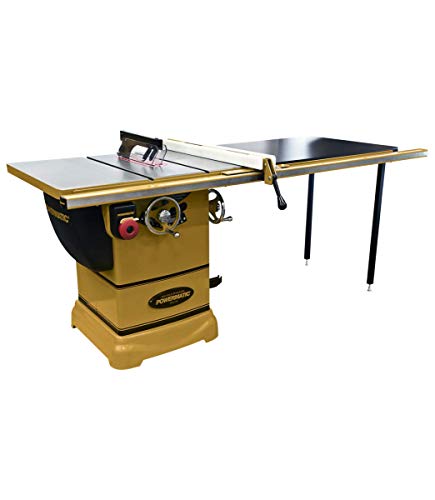 | Best Overall | Motor Power (HP): 1-3/4 HP | Rip Capacity: 52 inches | Weight: 393.8 lb | VIEW LATEST PRICE | Read Our Analysis |
| JET ProShop II 10-Inch Table Saw (JPS-10) |  | Professional Grade | Motor Power (HP): 1-3/4 HP | Rip Capacity: 52 inches | Weight: 326 lb | VIEW LATEST PRICE | Read Our Analysis |
| SAWSTOP 10-Inch Contractor Saw (CNS175-TGP252) |  | Safest Choice | Motor Power (HP): 1.75 HP | Rip Capacity: 52 inches | Weight: 362 lb | VIEW LATEST PRICE | Read Our Analysis |
| F2 Fusion Tablesaw |  | Editor’s Choice | Motor Power (HP): 1.75 HP | Rip Capacity: Not specified | Weight: 359 lb | VIEW LATEST PRICE | Read Our Analysis |
| Laguna Tools 10In 110V 1.5Hp F1 Fusion Table Saw |  | Budget-Friendly Pick | Motor Power (HP): 1.5 HP | Rip Capacity: Not specified | Weight: Not specified | VIEW LATEST PRICE | Read Our Analysis |
| JET ProShop II 10-Inch Table Saw (JPS-10) |  | Best Value | Motor Power (HP): 1-3/4 HP | Rip Capacity: 52 inches | Weight: 286 lb | VIEW LATEST PRICE | Read Our Analysis |
More Details on Our Top Picks
Powermatic 10-Inch Table Saw 52-Inch Rip
If you want a cast iron table saw that stands above the rest, the Powermatic PM1000 is your top contender. Its precision-ground cast iron work surface, complete with a beveled edge, gives you a rock-solid base. You’ll appreciate the ergonomic 7-handwheel system and the arbor lock for one-handed blade changes. The exclusive Accu-Fence delivers both rigidity and precision, while the Poly-V belt drive keeps vibration low and efficiency high. With a 1-3/4 HP motor and 4200 RPM, you rip through stock effortlessly.
- Rip capacity: 52 inches
- Blade: 10-inch, 50-tooth HSS
- Bevel: 45 degrees
The toolless guard assembly and riving knife make safety a breeze. Plus, the 393.8-pound build keeps everything stable. It’s a serious investment, but the limited 5-year warranty backs it up.
- Motor Power (HP):1-3/4 HP
- Rip Capacity:52 inches
- Weight:393.8 lb
- Blade Teeth Count:50 teeth
- Max RPM:4200 RPM
- Warranty:5-year limited
- Additional Feature:Ergonomic 7-handwheel system
- Additional Feature:Poly-V belt drive
- Additional Feature:Tool-less guard assembly
JET ProShop II 10-Inch Table Saw (JPS-10)
The JET ProShop II 10-Inch Table Saw is a professional grade choice for serious woodworkers who demand cabinet saw performance without the full industrial footprint. You get a 1-3/4 horsepower motor running on standard 120V power, paired with a 52-inch rip capacity and cast iron wings for rock-solid stability. The single-belt drive system minimizes vibration while making tensioning a breeze. Adjust the blade height and angle up to 45 degrees with precision, using the arbor lock for quick changes. Safety features include a transparent blade guard with independent leaves, a quick-release riving knife, and a magnetic paddle switch. Onboard storage keeps all accessories handy. Backed by a 5-year warranty, this saw delivers professional reliability.
- Motor Power (HP):1-3/4 HP
- Rip Capacity:52 inches
- Weight:326 lb
- Blade Teeth Count:50 teeth
- Max RPM:4000 RPM
- Warranty:5-year (2-year industrial)
- Additional Feature:Redesigned transparent blade guard
- Additional Feature:Improved dust shroud
- Additional Feature:Magnetic paddle switch
SAWSTOP 10-Inch Contractor Saw (CNS175-TGP252)
This saw is the safest choice for woodworkers who prioritize health over budget headaches. Its patented safety system stops the blade in under 5 milliseconds upon skin contact, then drops it below the table. You’ll likely escape with just a scratch instead of a life threatening injury. The control box continuously monitors that system, keeping you reliably protected.
Beyond safety, you get serious performance. The 1.75 HP motor and 52 inch T Glide fence deliver precise, square cuts. The poly v ribbed belts minimize vibration. Plus, you can configure over 150 options, like a mobile base or sliding crosscut table. The 2 year warranty backs it all up.
- Motor Power (HP):1.75 HP
- Rip Capacity:52 inches
- Weight:362 lb
- Blade Teeth Count:Not specified
- Max RPM:Not specified
- Warranty:2-year
- Additional Feature:Patented safety system
- Additional Feature:Blade drops below table
- Additional Feature:150+ configurable options
F2 Fusion Tablesaw
Laguna’s F2 Fusion is our editor’s choice for serious woodworkers who refuse to compromise on stability. You get a robust 1.75HP TEFC motor paired with a cast iron table and wings, delivering a rock-solid platform for every cut. The European hi-lo fence glides smoothly, making precise ripping feel effortless. Integrated dust collection keeps your workspace cleaner, and the cabinet-mounted arbor enhances long-term durability. Here’s what sets it apart:
- 10x60T carbide-tipped blade for clean crosscuts and rips.
- 359-pound build dampens vibration.
- 2-year warranty backs your investment.
At 4.8 out of 5 stars from 22 reviews, users consistently praise its accuracy and reliability.
- Motor Power (HP):1.75 HP
- Rip Capacity:Not specified
- Weight:359 lb
- Blade Teeth Count:60 teeth
- Max RPM:Not specified
- Warranty:2-year
- Additional Feature:European hi-lo fence
- Additional Feature:Integrated dust collection
- Additional Feature:Cabinet-mounted arbor
Laguna Tools 10In 110V 1.5Hp F1 Fusion Table Saw
If you’re chasing pro-grade cast iron on a budget, the Laguna Tools 10In 110V 1.5Hp F1 Fusion Table Saw is a standout budget-friendly pick. Its polished cast iron table delivers buttery-smooth ripping, while the 1.5HP TEFC motor handles hardwoods without bogging down. You’ll appreciate the redesigned trunnion and arbor controls, which keep cuts accurate for years, and the integrated dust collection actually works, not just pretends to.
You get a 60-tooth carbide blade right out of the box, saving you an immediate upgrade. Tool storage is built in, so everything stays tidy. Plus, a two-year full warranty and Amazon’s 30-day return window give you breathing room. For precise, repeatable rip cuts, this fusion saw punches well above its price tag.
- Motor Power (HP):1.5 HP
- Rip Capacity:Not specified
- Weight:Not specified
- Blade Teeth Count:60 teeth
- Max RPM:Not specified
- Warranty:2-year full
- Additional Feature:Integrated tool storage
- Additional Feature:Fusion dust collection system
- Additional Feature:Polished cast iron table
JET ProShop II 10-Inch Table Saw (JPS-10)
Looking for a contractor style cabinet saw that doesn’t demand a giant workshop? The JET ProShop II (JPS-10) delivers high-end functionality in a compact footprint. You get a 52-inch rip capacity, steel wings, and a wood extension table. Its redesigned transparent blade guard with independent leaves keeps your view clear, and the low-profile riving knife reduces kickback risks quickly. The improved dust shroud collects more debris, while onboard storage keeps accessories handy. Powered by a 1-3/4 HP motor reaching 4000 RPM, this saw handles angled cuts up to 45 degrees with ease. It even meets CSA safety standards.
- Motor Power (HP):1-3/4 HP
- Rip Capacity:52 inches
- Weight:286 lb
- Blade Teeth Count:50 teeth
- Max RPM:4000 RPM
- Warranty:5-year (2-year industrial)
- Additional Feature:Low-profile riving knife
- Additional Feature:Dado insert included
- Additional Feature:Single-belt drive system
Factors to Consider When Choosing a Cast Iron Table Saw
Before you commit to a cast iron workhorse, you’ve got to weigh a few non-negotiables that’ll make or break your shop experience. Think about the cast iron’s heft for vibration control, the motor’s amperage for demanding cuts, and the rip capacity that determines your maximum sheet good width, while blade guards and riving knives keep your digits safe and a solid dust collection port saves your lungs from sawdust soup. And don’t forget, a bigger table isn’t always better if your space is tight, so match these specs to your actual projects, not just the hype.
Cast Iron Durability
Since cast iron brings serious durability to the table, you’re getting a material that’s built to last. Its dense nature resists warping, so your fence stays true and your cuts stay accurate. You’ll also enjoy excellent vibration dampening; that rigidity means smoother rips and less wear on the machine itself. With proper maintenance, the surface resists rust, extending your saw’s lifespan considerably. This isn’t just about longevity, though.
- Structural integrity handles heavy use without fatigue.
- Precision holds tight for measurement accuracy.
- Stability keeps safety high, even under stress.
Don’t underestimate how much these factors matter. A cast iron saw doesn’t just feel solid; it performs that way for years. That’s real value for your shop.
Motor Power Needs
While durability is essential, none of that cast iron stability matters if your saw can’t muscle through the wood you throw at it. Motor power is your real workhorse. For general woodworking, a 1.5 to 1.75 HP motor handles most jobs just fine. But if you’re cutting thick hardwoods or running long rip sessions regularly, you’ll want at least 1.75 HP, ideally 2 HP or more. Why? Because suboptimal power leads to bogging down, overheating, and increased wear. That shortens your saw’s life. However, higher horsepower often generates more vibration. You’ll need that cast iron base to dampen it, keeping cuts precise. So match your motor to your workload. A 1.5 HP saw works for hobbyists, while professionals should prioritize 2 HP plus. Don’t let a weak motor waste that rock-solid table.
Rip Capacity Size
Rip capacity is your next big decision, and it’s more than just a number on a spec sheet. Think of it as the maximum width you can cut between the blade and your fence. Typical ranges run from 24 inches up to over 52 inches. So, what’s right for you? Consider the size of your common projects. If you’re ripping full sheets of plywood or large stock, you’ll want a larger capacity. A 52 inch rip capacity gives you ample room for most sheet goods, making it a favorite among serious hobbyists and pros. But don’t overbuy if you only work with smaller pieces. Here’s a quick guide:
- 24 to 30 inches: Great for small workshops, handling narrow boards and occasional sheet goods.
- 36 to 52 inches: Boosts efficiency, letting you cut wider materials in one pass, saving you time and hassle. Choose what fits your workspace and your workflow.
Blade Safety Features
Alright, what’s the first defense between you and a serious accident on a table saw? It’s a good blade guard and riving knife combo. You absolutely need a riving knife that’s quick release or easy to adjust; it’s your main kickback preventer. Without it, you’re asking for trouble. Also look for blade guards with independent leaves. They give you clear visibility while keeping your hands safe.
But don’t stop there. Advanced systems like SawStop’s skin detection tech stop the blade in under 5 milliseconds if it contacts skin. That’s serious injury prevention. Finally, check for proper safety certifications. They’re your assurance the saw meets industry standards. Prioritize these features, and you’ll cut with confidence, not fear.
Dust Collection System
So, how do you keep your workshop air breathable and your cleanup time minimal? It starts with a high-quality dust collection system. Look for a blade shroud or hood that connects directly to a shop vacuum or dedicated dust collector. You want an integrated setup that captures sawdust and debris efficiently during operation.
The real key is airflow rate, measured in CFM: larger numbers mean better extraction. You’ll also need a design that doesn’t restrict blade movement but still snags those fine particles. And make certain it’s easy to connect and detach for quick maintenance.
A proper system transforms your saw from a mess maker into a clean, safe workhorse. Don’t settle for poor dust management, it’s non-negotiable for your lungs and your floor!
Fence Precision
What makes a table saw truly reliable for repeatable, accurate cuts? The fence, plain and simple. You need a positive locking mechanism that bites hard, preventing any shift mid-cut. Wiggle the fence at full extension; if it flexes, you’ll chase drift all day. Look for a wide, smooth rail system with crisp, readable markings, so you set positions without squinting. Calibration is your friend here; easy-to-reach adjustment knobs mean you’ll fine-tune alignment in seconds, not after a frustrating hour. And don’t underestimate a fence that glides but locks with authority, it should feel planted, not springy. A flimsy fence ruins good cast iron, so prioritize rigidity over flashy extras. Your cuts will thank you.
Warranty Length
You’ve dialed in a fence that locks like a bank vault, but what happens if the motor gives out two years from now? Warranty length tells you how much the manufacturer trusts their cast iron build. Most saws carry one to five years of coverage. A longer term signals real confidence in durability, plain and simple.
But don’t just glance at the years. Dig into the fine print. Does it cover parts and labor? What about wear items like belts or switches? Accidental damage usually isn’t included, so know your limits. Also, watch out: if you’re running a shop commercially, expect shorter coverage than hobbyist warranties.
For peace of mind, aim for at least a three-year plan. That extra coverage can save you hundreds in repair bills down the road. Choose wisely, and your investment stays protected longer.
Weight And Stability
When you’re ripping heavy hardwoods or sliding a long panel through the blade, nothing matters more than the saw staying planted. Heavier models, often tipping the scales past 350 pounds, lock down vibrations that cause wandering cuts. The distribution of that cast iron mass is key; a well balanced table and wings create a solid, flat surface that won’t shift mid cut. That stability directly boosts your safety and precision, especially with oversized stock. But don’t ignore the trade off. These saws take more setup time and effort to move. Yet the payoff is huge. You get reduced operational wobble and consistent alignment over years of use. So when you’re choosing, prioritize weight. A heavy, stable saw makes every rip cut feel effortless and controlled.