You’ve spent years fighting your saw’s balance, twisting your wrist to see the cut line, and cursing a trigger that feels designed for someone else. But left handed circular saws actually exist to fix that. The problem is finding the right one.
| DEWALT FLEXVOLT 60V MAX Circular Saw (DCS577B) |  | Best Cordless Power | Power Source: Cordless (60V MAX battery) | Blade Size: 7-1/4 inches | Weight: 10.9 pounds | VIEW LATEST PRICE | Read Our Analysis |
| SKIL 15 Amp 7-1/4″ Magnesium Circular Saw |  | Best Value | Power Source: Corded (120V) | Blade Size: 7-1/4 inches | Weight: 10.6 pounds | VIEW LATEST PRICE | Read Our Analysis |
| SKILSAW SPT77WML-01 15-Amp Worm Drive Saw | 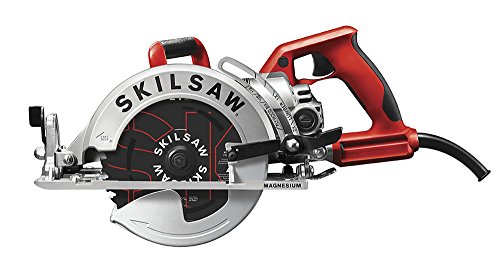 | Professional Grade | Power Source: Corded (120V) | Blade Size: 7-1/4 inches | Weight: 11.5 pounds | VIEW LATEST PRICE | Read Our Analysis |
| Makita 5477NB 7-1/4″ Hypoid Saw |  | Heavy-Duty Workhorse | Power Source: Corded (120V) | Blade Size: 7-1/4 inches | Weight: 18 pounds | VIEW LATEST PRICE | Read Our Analysis |
| Milwaukee M18 6-1/2″ Circular Saw Bare Tool |  | Lightweight Champ | Power Source: Cordless (18V battery) | Blade Size: 6-1/2 inches | Weight: 7.3 pounds | VIEW LATEST PRICE | Read Our Analysis |
More Details on Our Top Picks
DEWALT FLEXVOLT 60V MAX Circular Saw (DCS577B)
You need a saw that keeps your line of sight clear and doesn’t fight your natural stance. The DEWALT FLEXVOLT 60V MAX Circular Saw (DCS577B) delivers exactly that. Its worm-drive style positions the blade left of the motor with the handle at the rear, so you see your cut without leaning awkwardly.
You get a bevel capacity of 53 degrees with stops at 45 and 22.5 degrees, plus a max cut depth of 2-7/16 inches at 90 degrees. The brushless motor hits 5800 rpm, chewing through OSB, plywood, hardwoods, and dimensional lumber. A magnesium shoe keeps it durable yet light at 10.9 pounds. And the integrated dust blower clears your line automatically. No more stopping to blow sawdust away!
- Power Source:Cordless (60V MAX battery)
- Blade Size:7-1/4 inches
- Weight:10.9 pounds
- Bevel Capacity:53 degrees
- No-Load Speed:5,800 RPM
- Motor Type:Brushless
- Additional Feature:Tool Connect Tag-Ready
- Additional Feature:Onboard blade wrench storage
- Additional Feature:Integrated dust blower
SKIL 15 Amp 7-1/4″ Magnesium Circular Saw
For a quality left handed circular saw that delivers solid performance without breaking your budget, the SKIL 15 Amp 7-1/4″ Magnesium Circular Saw is a standout choice. Its all-magnesium build keeps weight down to just 10.6 pounds, so you won’t fatigue easily on long cuts. The left blade placement gives you a clear view of your cut line, boosting accuracy.
You get serious power here: 1800 watts spinning at 5300 RPM. That 56-degree bevel capacity handles compound cuts with ease. Plus, the dual-field motor runs cooler and lasts longer.
Key specs at a glance:
- Weight: 10.6 lbs for portability.
- Speed: 5300 RPM.
- Bevel: 56 degrees for versatile angles.
It’s a professional grade tool without the premium price tag.
- Power Source:Corded (120V)
- Blade Size:7-1/4 inches
- Weight:10.6 pounds
- Bevel Capacity:56 degrees
- No-Load Speed:5,300 RPM
- Motor Type:Dual-Field
- Additional Feature:All-magnesium body construction
- Additional Feature:Dual-Field motor cooling
- Additional Feature:180-day “Stay True” guarantee
SKILSAW SPT77WML-01 15-Amp Worm Drive Saw
The SKILSAW SPT77WML-01 is a professional grade worm drive saw that tops our list for lefties who refuse to compromise on torque. You get a 15 amp, 1800 watt motor that rips through lumber fast, and the lightweight magnesium housing (just 11.5 pounds) reduces fatigue without sacrificing durability. Its cut ready depth adjustment gives you quick, precise measurements, plus a 53 degree bevel for versatile cuts. The anti snag lower guard keeps operation smooth, especially with small pieces. Comes with a 24 tooth carbide blade and multi functional wrench, so you are ready to work right away.
- Power Source:Corded (120V)
- Blade Size:7-1/4 inches
- Weight:11.5 pounds
- Bevel Capacity:53 degrees
- No-Load Speed:Not specified
- Motor Type:Worm drive
- Additional Feature:Cut-ready depth adjustment
- Additional Feature:Anti-snag lower guard
- Additional Feature:Magnesium housing construction
Makita 5477NB 7-1/4″ Hypoid Saw
Framers and carpenters, meet your heavy-duty workhorse. This saw packs a 15 AMP motor with hypoid gears for stable, constant power on tough lumber like LVL and PSL. You’ll appreciate the oil bath technology that slashes maintenance, plus sealed gear housing for durability. Its large cutting capacity hits 2-3/8 inches at 90°, and bevel adjustments go up to 51.5° with positive stops at 45° and 51.5° for precise truss cuts. The oversized rubberized grip keeps you comfortable, while the push button spindle lock and onboard wrench make blade changes a breeze.
- Power Source:Corded (120V)
- Blade Size:7-1/4 inches
- Weight:18 pounds
- Bevel Capacity:51.5 degrees
- No-Load Speed:4,500 RPM
- Motor Type:Hypoid gear
- Additional Feature:Oil bath sealed gear housing
- Additional Feature:Hypoid gear design
- Additional Feature:Reinforced 10-foot cord
Milwaukee M18 6-1/2″ Circular Saw Bare Tool
You’re a lefty looking for a saw that won’t weigh you down. This Milwaukee M18 6-1/2″ bare tool tips the scales at just 7.3 pounds. That lightweight feel comes from magnesium guards and an aircraft aluminum shoe. You’ll appreciate that durability on job sites. The soft grip handle gives you control during cuts, and the 3,500 RPM motor rips through LVL headers without bogging down.
Need specifics? Here’s what stands out:
- Magnesium upper and lower guards protect the blade from drops
- Aircraft aluminum shoe keeps things accurate yet light
- Ergonomic handle fits your grip comfortably
Just remember you’ll need a battery and charger separately. Over 1,700 reviewers rate it 4.6 stars. That’s solid.
- Power Source:Cordless (18V battery)
- Blade Size:6-1/2 inches
- Weight:7.3 pounds
- Bevel Capacity:Not specified
- No-Load Speed:3,500 RPM
- Motor Type:Standard (not specified)
- Additional Feature:Aircraft aluminum shoe
- Additional Feature:Magnesium upper/lower guards
- Additional Feature:Soft-grip ergonomic handle
Factors to Consider When Choosing a Left Handed Circular Saw

When you’re picking the perfect left handed circular saw, you need to focus on a few key specs that will make or break your cuts. Your main choices boil down to the power source type, blade size options, and bevel capacity range, plus you can’t ignore the weight and portability or the motor performance specs. Think of these factors as your checklist for a saw that feels like it was built just for you, not an awkward righty model you’re forced to adapt to.
Power Source Type
Choosing the right power source for your left-handed circular saw comes down to two main options: corded electric or cordless battery-powered. Corded saws deliver consistent, unwavering power, making them your go-to for heavy duty tasks like ripping thick lumber or cutting through stacked sheets. You won’t worry about battery life, but you’re tethered to an outlet.
Cordless saws offer incredible portability and maneuverability, letting you work on a roof or in a tight corner without dragging a cord. They typically run on 18V, 20V, or 60V batteries. Higher voltage gives you more grunt for demanding cuts. Just remember, you’ll need to recharge or swap batteries, and these models are often lighter, which reduces fatigue. So, weigh your mobility needs against outlet availability. If you’re constantly on the move, go cordless. For stationary, heavy work, corded wins.
Blade Size Options
So, what size blade should you grab for your left handed circular saw? Most models offer blades from 6 1/2 inches to 7 1/4 inches. That 7 1/4 inch option is your go to for a solid balance between portability and cutting capacity. You’ll get about 2 1/2 inches of cut depth at 90 degrees, enough for standard lumber.
But if you’re doing lighter tasks or precision work, consider a 6 1/2 inch blade. It’s more lightweight and easier to handle, with a max depth around 1 3/4 inches. Perfect for quick trim jobs. Larger blades over 7 1/4 inches exist, but they add weight and size. For most home and pro use, stick with the common 7 1/4 inch. It’s versatile and won’t weigh you down. Choose based on your material thickness, not just size.
Bevel Capacity Range
Bevel capacity isn’t just a spec sheet number—it’s the difference between making quick, everyday cuts and tackling complex angled joints. You’ll typically find ranges from 45° to 53°. A wider bevel range gives you versatility for framing and roofing compound angles. Look for saws with adjustable bevel stops at common angles like 22.5°, 45°, and sometimes 53°, which lets you lock in quickly for repetitive cuts without guesswork. For advanced carpentry, choose a larger capacity to handle complex tasks. And remember, locking at specific angles boosts both precision and efficiency during those repetitive angled cuts. Don’t settle for basic; get the range your projects demand.
Weight and Portability
Since weight directly affects how long you can cut without your arm giving out, it’s a critical factor for left handed users. You’ll want a saw in the 7 to 11 pound range. That’s the sweet spot for balancing power with portability. A lighter saw reduces strain on your arms and shoulders, making those prolonged cutting tasks much more manageable.
Compact designs also help you maneuver in tight spaces. And don’t underestimate how much easier it is to transport a smaller saw between job sites. You get better control and stability, especially when paired with an ergonomic grip. That’s a huge advantage for your dominant hand.
Finally, a lightweight saw simplifies storage and declutters your workspace. You’ll appreciate that at the end of a long day.
Motor Performance Specs
Two motor specs matter most when you’re picking a left-handed circular saw: wattage and RPM. Higher wattage means you’ve got the muscle for demanding cuts, like ripping through thick hardwoods or dense plywood, without bogging down. RPM, or revolutions per minute, dictates the blade’s speed, directly impacting cut quality and efficiency. A fast spin gives you smoother finishes, while proper speed control prevents binding or stalling during tough jobs.
But don’t overlook dual-field motors. They’re designed for enhanced cooling, which extends motor life and keeps performance steady even during extended use. That’s a big plus when you’re working on a long project. So, focus on these specs: you want a high wattage motor for power, strong RPM for speed, and dual field technology for durability. They’re the trio that guarantees your saw cuts cleanly and reliably every time.
Ergonomics and Grip
Ergonomics and grip are where a left-handed circular saw truly earns its keep, especially on those marathon cutting sessions. You’ll want a handle that feels like an extension of your hand, not a wrestling match. Look for textured or rubberized surfaces they stop slipping when sweat or dust kicks up. The controls should fall right under your thumb and fingers, letting you operate without fumbling. A balanced saw reduces strain on your wrist and arm, so you can focus on the cut, not the fatigue. And remember, a natural grip enhances control and precision, keeping your line true. Don’t settle for a saw that fights you; find one that works with your body. Your hands will thank you after a long day of cutting.
Safety Feature List
Three key safety features you can’t overlook on a left-handed circular saw: an electronic brake, a blade guard, and a safety lock mechanism. The electronic brake stops the blade almost instantly after you release the trigger, slashing the risk of injury during accidental contact. Look for an anti-snag lower guard; it retracts smoothly and protects you from cuts. The safety lock prevents the saw from firing up by mistake, so you won’t get a surprise start.
Beyond these essentials, consider a dust blower or vacuum port to keep your cut line clear, reducing errors. An ergonomic handle with a secure grip also minimizes slipping and boosts control.
For extra confidence, choose a model with a solid guard design and easy to reach lock. These features aren’t optional, they’re your best defense.