You’re cutting plexiglass, and you already know the struggle. One wrong blade, and you’ve got melted edges, chipped corners, or a cracked sheet. That’s why you need a blade built for plastic. The right one makes the difference between a ruined project and a clean, polished edge. So, what makes these seven blades stand out? Let’s break it down.
| CMT Orange Tools Circular Saw Blade |  | Best For Plastics | Blade Diameter: 10 inches | Arbor Size: 5/8 inch | Number of Teeth: 80 teeth | VIEW LATEST PRICE | Read Our Analysis |
| 10-Inch 120-Tooth Fine-Finish Miter Saw Blade | 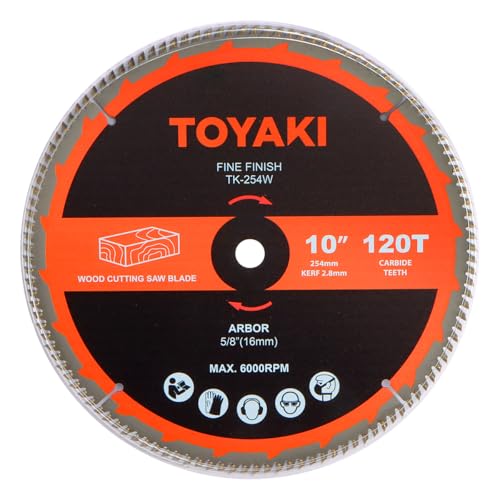 | Best For Finishing | Blade Diameter: 10 inches | Arbor Size: 5/8 inch (16mm) | Number of Teeth: 120 teeth | VIEW LATEST PRICE | Read Our Analysis |
| 10-Inch 100T Carbide Tooth TCG for Aluminum Saw Blade with 5/8-Inch Arbor |  | Most Versatile | Blade Diameter: 10 inches | Arbor Size: 5/8 inch | Number of Teeth: 100 teeth | VIEW LATEST PRICE | Read Our Analysis |
| Freud LU94M008: 8″ x 64T Plastic Blade |  | Best For Compact Saws | Blade Diameter: 8 inches | Arbor Size: 5/8 inch | Number of Teeth: 64 teeth | VIEW LATEST PRICE | Read Our Analysis |
| 10-Inch TCG 120-Tooth Miter Saw Blade |  | Professional Grade | Blade Diameter: 10 inches | Arbor Size: 5/8 inch (16mm) | Number of Teeth: 120 teeth | VIEW LATEST PRICE | Read Our Analysis |
| FOXBC 10-Inch 80-Tooth TCG Saw Blade |  | Best For Metals | Blade Diameter: 10 inches | Arbor Size: 5/8 inch | Number of Teeth: 80 teeth | VIEW LATEST PRICE | Read Our Analysis |
| Freud LU94M010: 10″ Plastic Blade | 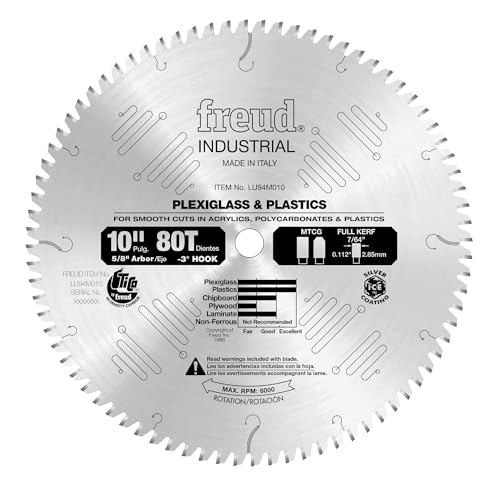 | Editor’s Choice | Blade Diameter: 10 inches | Arbor Size: 5/8 inch | Number of Teeth: 80 teeth | VIEW LATEST PRICE | Read Our Analysis |
More Details on Our Top Picks
CMT Orange Tools Circular Saw Blade
If you’re cutting plastics and Plexiglass without melting, CMT Orange Tools 222.080.10 is the blade you want. Its 80 teeth and modified alternate top bevel grind (MATB) work together to keep friction low and cuts clean, so you avoid that gummy, melted edge. The blade’s laser cut steel includes heat expansion slots and a tensioning ring for stability, while industrial chrome carbide brazing gives you a mirror finish. It fits slide miter saws and table saws, handling thin plastics, vinyl, and laminated flooring. Plus, it comes with a limited lifetime warranty.
- Blade Diameter:10 inches
- Arbor Size:5/8 inch
- Number of Teeth:80 teeth
- Tooth Grind Design:Modified alternate top bevel (MATB)
- Material Construction:Laser-cut premium steel with chrome carbide
- Compatible Saw Types:Miter saws, squaring machines, table saws
- Additional Feature:Heat expansion slots
- Additional Feature:Sound dampening slots
- Additional Feature:Tri-metal brazing
10-Inch 120-Tooth Fine-Finish Miter Saw Blade
You’re looking for a blade that turns your miter saw into a finishing tool, and this 10-inch, 120 tooth TOYAKI model delivers exactly that. It’s made from high grade carbide and high speed steel, so you get durability and cutting efficiency in one package. The specialized tooth pattern minimizes vibration and keeps cuts clean and precise. Installation is straightforward too, thanks to the standard 5/8 inch arbor. Use it on miter, table, or circular saws for detailed woodworking or soft materials. Plus, customers rate it 4.6 out of 5 stars from 139 reviews.
- Blade Diameter:10 inches
- Arbor Size:5/8 inch (16mm)
- Number of Teeth:120 teeth
- Tooth Grind Design:Specialized teeth pattern (not specified)
- Material Construction:High-grade steel with carbide and high-speed steel
- Compatible Saw Types:Miter saws, table saws, circular saws
- Additional Feature:Vibration-minimizing tooth pattern
- Additional Feature:High-speed steel construction
- Additional Feature:Fine-finish optimized design
10-Inch 100T Carbide Tooth TCG for Aluminum Saw Blade with 5/8-Inch Arbor
The MASTEC MTA10100 is the blade for you if you need clean cuts across multiple materials. It’s a 10-inch, 100-tooth carbide saw blade with a 5/8-inch arbor, featuring triple chip grind (TCG) teeth for precision. This blade handles aluminum, plexiglass, plastic, and non-ferrous metals with ease.
You’ll get smooth, chip free cuts on your miter saw, circular saw, or table saw. It measures 2.8 mm thick and weighs just 0.88 kg. With a stellar 4.7 star rating from 708 reviews and a 100% replacement guarantee, it’s a reliable choice. And MASTEC resolves issues within 24 hours.
- Blade Diameter:10 inches
- Arbor Size:5/8 inch
- Number of Teeth:100 teeth
- Tooth Grind Design:Triple chip grind (TCG)
- Material Construction:Carbide tooth construction
- Compatible Saw Types:Miter saws, circular saws, table saws
- Additional Feature:100% replacement guarantee
- Additional Feature:Triple chip tooth design
- Additional Feature:Non-ferrous metal cutting
Freud LU94M008: 8″ x 64T Plastic Blade
8 inches makes this blade a natural fit for compact saws, but don’t let its size fool you. You get 64 teeth with a modified triple-chip grind that keeps cuts cool and clean. That negative hook angle? It gives you exceptional control, preventing the blade from grabbing your workpiece. You’ll see minimal chipping on acrylics and polycarbonates. Freud’s TiCo carbide tips stay sharp longer, and the Silver I.C.E. coating fights heat and resin buildup. Plus, anti-vibration slots reduce chatter, so you get smooth, accurate cuts without needing stabilizers. It handles thicknesses from 1/4 to 1-5/8 inches. A limited lifetime warranty backs it all.
- Blade Diameter:8 inches
- Arbor Size:5/8 inch
- Number of Teeth:64 teeth
- Tooth Grind Design:Modified triple-chip grind (MTCG)
- Material Construction:Laser-cut high-strength steel with TiCo Hi-Density Carbide
- Compatible Saw Types:Circular saws, miter saws, table saws, radial arm saws
- Additional Feature:Silver I.C.E. coating
- Additional Feature:Laser-cut anti-vibration slots
- Additional Feature:Negative hook angle design
10-Inch TCG 120-Tooth Miter Saw Blade
For fine, polished cuts on plexiglass and acrylics, this blade really delivers. The TOYAKI 10 inch miter saw blade packs 120 teeth into a 2.8mm thick design, so you get stable, chip free results every time. It’s built for non ferrous materials like aluminum and plastics, meaning plexiglass is right in its wheelhouse. The high grade carbide stays sharp through heavy use, and the standard 5/8 inch arbor fits most miter or table saws without hassle. You’ll appreciate the consistent finish it leaves behind. Just mount it and cut.
- Blade Diameter:10 inches
- Arbor Size:5/8 inch (16mm)
- Number of Teeth:120 teeth
- Tooth Grind Design:Triple chip grind (TCG)
- Material Construction:Professional-grade carbide
- Compatible Saw Types:Miter saws, table saws, circular saws
- Additional Feature:Fine-finish tooth design
- Additional Feature:High-grade carbide construction
- Additional Feature:Non-ferrous metal compatible
FOXBC 10-Inch 80-Tooth TCG Saw Blade
You’re cutting through non-ferrous metals like aluminum extrusions, copper pipes, or brass plates, so you need a blade that won’t dull fast or leave messy edges. The FOXBC 10-Inch 80-Tooth TCG blade delivers exactly that. Its triple chip grind geometry maximizes cutting speed and efficiency while keeping burrs at bay. Laser cut stabilizer vents reduce noise and vibration, so you get cleaner, more accurate cuts. With a 0.094-inch kerf and high-density tungsten carbide construction, this blade stays tough and lasts. It fits most 10-inch miter and table saws, including Dewalt and Makita. A solid 4.8-star average from 178 reviews says it all!
- Blade Diameter:10 inches
- Arbor Size:5/8 inch
- Number of Teeth:80 teeth
- Tooth Grind Design:Triple chip grind (TCG)
- Material Construction:High-density tungsten carbide
- Compatible Saw Types:Miter saws, slide miter saws, table saws
- Additional Feature:Laser-cut stabilizer vents
- Additional Feature:High-density tungsten carbide
- Additional Feature:Burr-free cutting capability
Freud LU94M010: 10″ Plastic Blade
If you cut acrylic or polycarbonate often, this blade earns our editor’s choice for clean, cool cuts. Its 80 teeth with a modified triple chip grind keep material from melting, while a negative 3 degree hook angle prevents grabbing. The Silver Ice coating fights corrosion and pitch buildup.
This blade fits any circular saw with a 5/8 inch arbor. You get a .110 inch kerf and a .087 inch plate thickness for stability. The micrograin carbide tips hold their edge remarkably well. For crisp edges on plexiglass without chipping or cloudiness, this Freud delivers every time.
- Blade Diameter:10 inches
- Arbor Size:5/8 inch
- Number of Teeth:80 teeth
- Tooth Grind Design:Modified triple chip grind (MTCG)
- Material Construction:Micrograin carbide tips
- Compatible Saw Types:Circular saws
- Additional Feature:Silver Ice coating
- Additional Feature:Modified triple chip grind
- Additional Feature:Micrograin carbide tips
Factors to Consider When Choosing a Plexiglass Table Saw Blade
When you’re picking a blade for plexiglass, focus on four key specs: tooth count & type, blade diameter & arbor, tooth grind geometry, and hook angle design. A high tooth count, like 60 to 80 teeth on a 10-inch blade, delivers that smooth, chip-free cut you need, while a triple-chip grind (TCG) prevents melting. And don’t forget a non-stick coating to reduce friction, because that’s your best defense against heat buildup and edge chipping.
Tooth Count & Type
Two key factors drive your blade choice for plexiglass: tooth count and tooth type.
Higher tooth counts, think 80 or more, deliver that silky, polished finish you’re after for edge work. They take smaller bites, reducing the chance of grab or fracture.
Now, tooth type matters just as much. A triple chip grind (TCG) configuration is your best friend here. It alternates a flat raker with a chamfered tooth, which slices through plastic cleanly and throws chips out fast, preventing the heat that melts or warps your sheet. Micro-grain carbide teeth also keep their edge longer, so you’re not fighting dullness mid-cut.
Pair the right count with a TCG grind, and you’ll get speed, smoothness, and a burr-free edge every pass. It’s a simple combo that saves you from sanding later.
Blade Diameter & Arbor
Your saw’s arbor and the blade’s diameter need to be a perfect match, or you’re asking for trouble. Most standard table saws run a 10-inch blade, which handles plexiglass beautifully. And don’t overlook the arbor bore, that’s the hole in the center. It usually sits at 5/8 inches. If those two don’t line up, you’ll get wobbling, vibration, and a blade that might just become a projectile. Not fun.
Check that arbor hole is centered precisely. An off-center hole ruins cut accuracy and grinds unevenly, damaging both blade and material. Some blades come with adapters to fit multiple arbor sizes. That’s a handy trick if you switch saws. It gives you flexibility without buying a new blade each time. Just confirm the fit before you spin it up.
Tooth Grind Geometry
Wondering why some blades leave a perfect glass-like edge on plexiglass while others turn it into a mess of chips and melted plastic? The secret lies in tooth grind geometry. You want a modified triple-chip grind (MTCG) or an alternate top bevel (ATB) here. These designs enhance chip clearance, reducing the risk of chipping or melting.
The shape and angle of each tooth directly control heat dissipation. And that’s critical for preventing your plexiglass from warping or melting. Optimized grind balances smoothness with accuracy, minimizing vibrations that cause cracks or chips. For example, a negative hook angle gives you more control, while a positive one can be dangerous on delicate materials. Remember this: proper grind geometry is your ticket to clean, professional cuts every time.
Hook Angle Design
Now, after focusing on tooth geometry, let’s look at the blade’s hook angle—that forward or backward lean of each tooth. For Plexiglass, you’ll want a negative hook angle, typically around -3°. This isn’t just a technicality; it’s your best defense against material grabbing and ragged edges.
- Smoother finishes: A negative hook cuts with a scraping action, leaving a cleaner surface than a positive hook’s aggressive bite.
- Less chipping: Positive angles tear into fragile plastic, causing micro-fractures and melt marks.
- Better control: You’ll feel less kickback, which keeps your workpiece stable and your hands safer.
Coating & Material Protection
Since the tooth geometry and hook angle set the stage for cut quality, coatings and material protection are what keep that performance going cut after cut. You’ll want a blade with a coating like Silver I.C.E. or TiCo Hi-Density Carbide. These resist corrosion and pitch buildup, so your blade lasts longer without losing its edge. They also reduce heat accumulation, which is critical because overheating melts and warps Plexiglass. Less friction means smoother cuts, too, with less material adhesion on the blade. Look for anti-vibration slots alongside coatings; they prevent premature wear from heat and debris. And here’s a bonus: high-quality coatings make cleaning a breeze. Just wipe off residue, and you’re ready for the next project. It’s simple maintenance that keeps your cuts clean without chipping!
Material Thickness Capability
Once you’ve got a blade with solid coatings and anti-vibration slots, you’ll want to match it to the thickness of the material you’re cutting. This capability determines the maximum depth it can handle without chipping or melting. Thicker plastics demand blades with higher horsepower ratings and more robust tooth designs. Pay attention to tooth spacing and shape. A wide gullet clears waste better on thick sheets, reducing heat buildup. If you use a blade not rated for your material’s thickness, you risk increased wear, bending, and even vibration that can be a safety hazard. So, choose a blade built for your plexiglass thickness, and you’ll prevent rough edges and extend blade life. That’s a win for your cuts and your saw.
Cut Quality & Precision
What actually determines the quality of a cut on plexiglass? It’s not just about the blade spinning fast. You need a fine tooth count, usually 64 to 120 teeth, to prevent chipping. Precision ground teeth with special coatings keep sharpness longer, reducing melting or rough edges. A negative hook angle, like -3°, gives you better control and a smoother finish without grabbing the material. Plus, a thin kerf design removes less material, so you avoid stress fractures. For consistent precision, stable construction and balanced design matter, along with effective heat dissipation to stop warping. Focus on these features, and you’ll get clean, exact cuts every time.

Welcome to WoodCraftYard.com, your one-stop destination for all things woodworking! I’m Oliver Candler, a dedicated woodworking aficionado and the creative mind behind this virtual woodworking haven. With a deep-rooted love for craftsmanship and a keen eye for detail, I am on a mission to share my passion for woodworking with fellow enthusiasts like yourself.
As a seasoned woodworker, I am committed to providing you with valuable insights, practical tips, and inspiring project ideas to help you unleash your creativity and master the art of woodworking. Whether you’re a seasoned pro or just starting out on your woodworking journey, join me as we carve, sand, and saw our way through the world of woodworking together.
Let’s embark on this woodworking adventure, where every knot, grain, and finish tells a unique story. Together, let’s craft, create, and build something truly extraordinary at WoodCraftYard.com!