So you want a saw that does double duty without the headache of swapping tools. That’s exactly what these three combos deliver: a one stop shop for straight cuts and angled ones. First up is a compact 8-1/4″ option with a powerful 12A motor and a seamless mode switch. Let’s see how it handles the pressure.
| 8-1/4″ 2-in-1 Miter & Table Saw Combo |  | Best Power | Motor Power: 12A (1200W) | Blade Diameter: 8-1/4 inches | Maximum Bevel Angle: 0–45° left | VIEW LATEST PRICE | Read Our Analysis |
| Hoteche 8-1/4-Inch 2-in-1 Miter & Table Saw |  | Most Portable | Motor Power: 10A (1200W) | Blade Diameter: 8-1/4 inches | Maximum Bevel Angle: 0–45° | VIEW LATEST PRICE | Read Our Analysis |
| Evolution R8MTS 8-1/4″ Convertible Miter/Table Saw |  | Best Multi-Material | Motor Power: 12A (1440W) | Blade Diameter: 8-1/4 inches | Maximum Bevel Angle: 0–45° | VIEW LATEST PRICE | Read Our Analysis |
More Details on Our Top Picks
8-1/4″ 2-in-1 Miter & Table Saw Combo
If you value power without sacrificing versatility, this 8-1/4″ 2-in-1 Miter & Table Saw Combo is your clear pick. It’s a compact powerhouse. You get a 12A pure copper motor that rips through wood, plastic, aluminum, and even soft metals at 5,500 RPM without stalling. That 80-tooth TCT blade delivers clean, precise cuts every time.
Here’s what you’ll love about switching modes:
- Miter saw mode: Crosscuts and 0-45° left bevels are a breeze.
- Table saw mode: You can make rip cuts up to 30mm deep.
Advanced safety features protect you. Overload protection cuts the motor automatically during excessive heat or load. Plus, the magnetic anti-accidental start switch and work clamp keep your hands safe. Dual extension rails and a dual-locking system give you stability for precise cuts. It folds for easy storage, too!
- Motor Power:12A (1200W)
- Blade Diameter:8-1/4 inches
- Maximum Bevel Angle:0–45° left
- Blade Teeth Count:80-tooth TCT
- No-Load Speed:5,500 RPM
- Weight:Not specified
- Additional Feature:Overload protection auto shut-off
- Additional Feature:Magnetic anti-accidental start switch
- Additional Feature:Foldable for easy storage
Hoteche 8-1/4-Inch 2-in-1 Miter & Table Saw
You’ll love the Hoteche 8‑1/4‑Inch 2‑in‑1 if you need a workshop that travels. It weighs just 22.4 pounds, so you can easily haul it between job sites. The 10 amp motor spins at 4500 RPM, giving you clean cuts through wood, plastic, metal, and molding. You get a single bevel miter saw that tilts up to 45 degrees, plus a table saw in one compact unit. And it includes a TCT blade, a clamp, hex key, and two extension rods. For a versatile, portable 2‑in‑1, this is a solid choice.
- Motor Power:10A (1200W)
- Blade Diameter:8-1/4 inches
- Maximum Bevel Angle:0–45°
- Blade Teeth Count:24-tooth high-speed steel
- No-Load Speed:4,500 RPM
- Weight:22.4 lb
- Additional Feature:Extended warranty included
- Additional Feature:24-tooth high-speed steel blade
- Additional Feature:Single bevel, max 45°
Evolution R8MTS 8-1/4″ Convertible Miter/Table Saw
The Evolution R8MTS 8-1/4″ Convertible Miter/Table Saw is a standout for multi material cutting. You’ll love how it powers through wood, plastic, mild steel, aluminum, and composites using the same 24-tooth TCT blade. Weighing just 28.6 pounds, it’s a breeze to move around your shop or job site.
For miter work, you get a 0 to 45 degree bevel and stops at common angles. In table mode, the rip capacity is 1-1/2 inches. Safety features include a blade guard that stays covered until contact and a riving knife to reduce kickback. The cast aluminum tabletop stays flat and true. Plus, dual dust ports keep your workspace clean.
- Motor Power:12A (1440W)
- Blade Diameter:8-1/4 inches
- Maximum Bevel Angle:0–45°
- Blade Teeth Count:24-tooth TCT
- No-Load Speed:Not specified
- Weight:28.6 lb
- Additional Feature:Cuts mild steel and aluminum
- Additional Feature:Dust extraction ports included
- Additional Feature:Pre-set miter stops at ±45°
Factors to Consider When Choosing a Table Miter Saw Combo
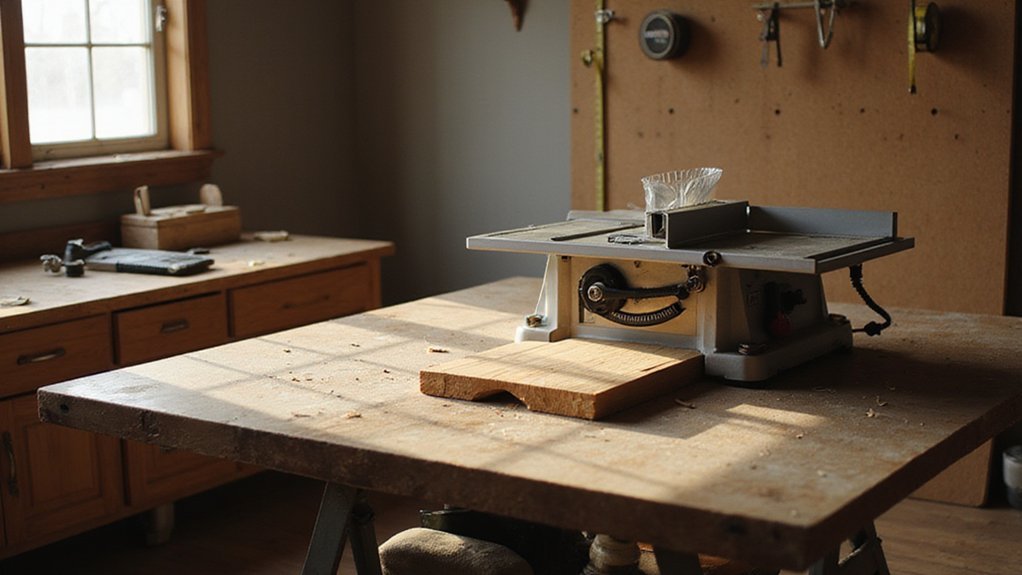
When you’re picking a table miter saw combo, start by checking the power and motor specs because that directly drives your cutting ability. Next, look at the cutting capacity for angles and the blade quality with its teeth count, as these determine how clean and precise your cuts will be. And don’t overlook portability, weight, and the safety features included, since you’ll want a setup that’s easy to move but still protects you on the job.
Power & Motor Specs
Several key specs determine how a table miter saw combo handles tough materials, starting with the motor’s wattage and amperage. You’ll typically see 10A (1200W) to 12A (1440W) motors, and that extra juice isn’t just bragging rights. Higher wattage delivers more cutting torque, so you power through dense aluminum or steel without bogging down.
Don’t overlook no-load speed either; 4,500 to 5,500 RPM is your sweet spot. Faster spins mean cleaner, smoother cuts, plain and simple. That powerful motor also resists stalling and overheating during long sessions, which boosts durability and safety.
When you combine amperage and RPM, you access real performance. Look for these specs and you’ll handle any project with confidence, without the motor complaining. It’s that straightforward.
Cutting Capacity Angles
Cutting capacity at different angles is what separates a versatile saw from a one-trick pony. You’ll often find that bevel and miter angles, typically adjustable from 0° to 45°, directly impact how wide or long you can cut your workpiece. Here’s what you need to watch for:
- Bevel cuts reduce maximum crosscut capacity as you tilt the blade, so plan for compound cuts carefully.
- Miter adjustments also shrink your rip capacity; a 45° miter might cut your board length in half.
- Preset stops at common angles like 22.5° or 45° save you time on repetitive jobs.
Understanding this interplay is key. For example, if you’re framing crown molding, you’ll need a saw that maintains usable capacity at steep miter settings. Always check the specs at your typical cutting angles, not just at 0°, to avoid surprises mid-project!
Blade Quality & Teeth
Since the blade is what actually does the cutting, its quality and tooth configuration directly determine the finish and speed of your work. Want glassy smooth crosscuts? Look for 80+ teeth on an alternate top bevel (ATB) grind. That combo delivers fine, detailed cuts for trim work. For quick, rough framing cuts, a blade with around 24 teeth rips through material fast. You’ll also want tungsten carbide tipped blades. They stay sharp longer and resist overheating, so you won’t swap blades mid project. Triple chip grind (TCG) blades handle tough stuff like laminates or non ferrous metals with precision. Forget cheap steel; invest in a blade engineered to stay true and warp free. Your combo’s blade is its heart, so don’t skimp here.
Portability & Weight
Lighter saw combos are generally easier to tote around, making them perfect for mobile workers or anyone tight on storage space. You’ll appreciate a 30-pound model when you’re hauling it up stairs or stashing it in a cramped trunk. But don’t let low weight fool you: heavier units often offer increased stability during cutting, reducing vibrations and enhancing precision. That extra heft can be a lifesaver for long, repetitive cuts.
Safety Features Included
Safety is non-negotiable on a combo saw, and the best models pack a suite of protections that let you focus on your cut, not your fingers. First, you need a blade guard that automatically snaps back over the blade when you finish a cut, preventing accidental contact. Then, look for an anti-kickback mechanism or riving knife; these reduce the risk of the saw throwing material back at you, a real game saver. Overload protection is also key, shutting off the motor if it gets too hot or you push it too hard. And don’t forget secure work clamps to lock your piece in place, plus an anti accidental start switch. For a cleaner workspace, pick a model with dust extraction ports and safety covers on moving parts. These features aren’t optional, they’re your daily armor.
Build Material Durability
While you’re focused on features and cuts, the building blocks of your saw’s body matter just as much. Cast aluminum or high-quality steel construction isn’t just marketing fluff; it’s what keeps your cuts precise over years of use. Heavy-duty materials actively dampen vibration, so you’re not fighting the saw for accuracy. You’ll notice cleaner edges on every cut.
Pay close attention to these key components:
- Table and fence materials: They directly impact accuracy. Warp-resistant metals or reinforced composites hold tolerances better.
- Tungsten carbide blades: They resist wear stubbornly, staying sharp far longer than standard steel.
- Corrosion resistance: Powder coated finishes or rust proof metals prevent decay. That means your investment doesn’t degrade after a humid job site session.
Conversion Ease & Speed
Because your miter and table saw modes are useless if switching between them eats up half your workday, you need a combo that flips quickly. Look for quick locking clamps and easy to adjust fences; they’ll cut downtime dramatically. A lightweight, well designed saw lets you shift effortlessly without wobbling. Integrated features like foldable components or positioned locking levers speed up mode changes too.
- Check if tools are required: Some models switch tool free, while others need a wrench. Go for the former.
- Inspect preset angle stops: Clear, accessible guides save you from fiddling with measurements.
You’ll finish a cut, switch modes, and start the next in seconds. That’s the kind of speed that keeps your workflow humming.
Warranty & Support Scope
Speed isn’t everything; even the fastest switching combo is useless if it breaks down and you’re left waiting weeks for support. So, before you buy, lock down the warranty scope. You want coverage that includes both parts and labor, typically for at least 30 days. Check if the manufacturer offers extended warranty options, too, for extra peace of mind beyond that standard period.
Now, review their support services. You need reliable customer assistance and technical help during the warranty period, especially if something goes wrong. Confirm the warranty explicitly covers potential defects, malfunctions, or accidental damage. Finally, understand the claim process. Know what documentation you’ll need, typical response times, and where authorized repair centers are located. This isn’t just paperwork; it’s your safety net. Don’t skip it.

Welcome to WoodCraftYard.com, your one-stop destination for all things woodworking! I’m Oliver Candler, a dedicated woodworking aficionado and the creative mind behind this virtual woodworking haven. With a deep-rooted love for craftsmanship and a keen eye for detail, I am on a mission to share my passion for woodworking with fellow enthusiasts like yourself.
As a seasoned woodworker, I am committed to providing you with valuable insights, practical tips, and inspiring project ideas to help you unleash your creativity and master the art of woodworking. Whether you’re a seasoned pro or just starting out on your woodworking journey, join me as we carve, sand, and saw our way through the world of woodworking together.
Let’s embark on this woodworking adventure, where every knot, grain, and finish tells a unique story. Together, let’s craft, create, and build something truly extraordinary at WoodCraftYard.com!